Brand/Client: Carhartt
Industry: Work / Consumer Product
Role: Lead Industrial Designer
Contributions: Concept Development / 3D Modeling / Prototyping / Tech Pack Support / CMF / Vendor Coordination
BRIEF: EVOLVE CARHARTT TOOL STORAGE INTO A MORE DURABLE, EFFICIENT, AND VERSATILE SYSTEM BUILT TO WORK HARD ACROSS TRADES, JOBSITES, AND EVERYDAY USE.
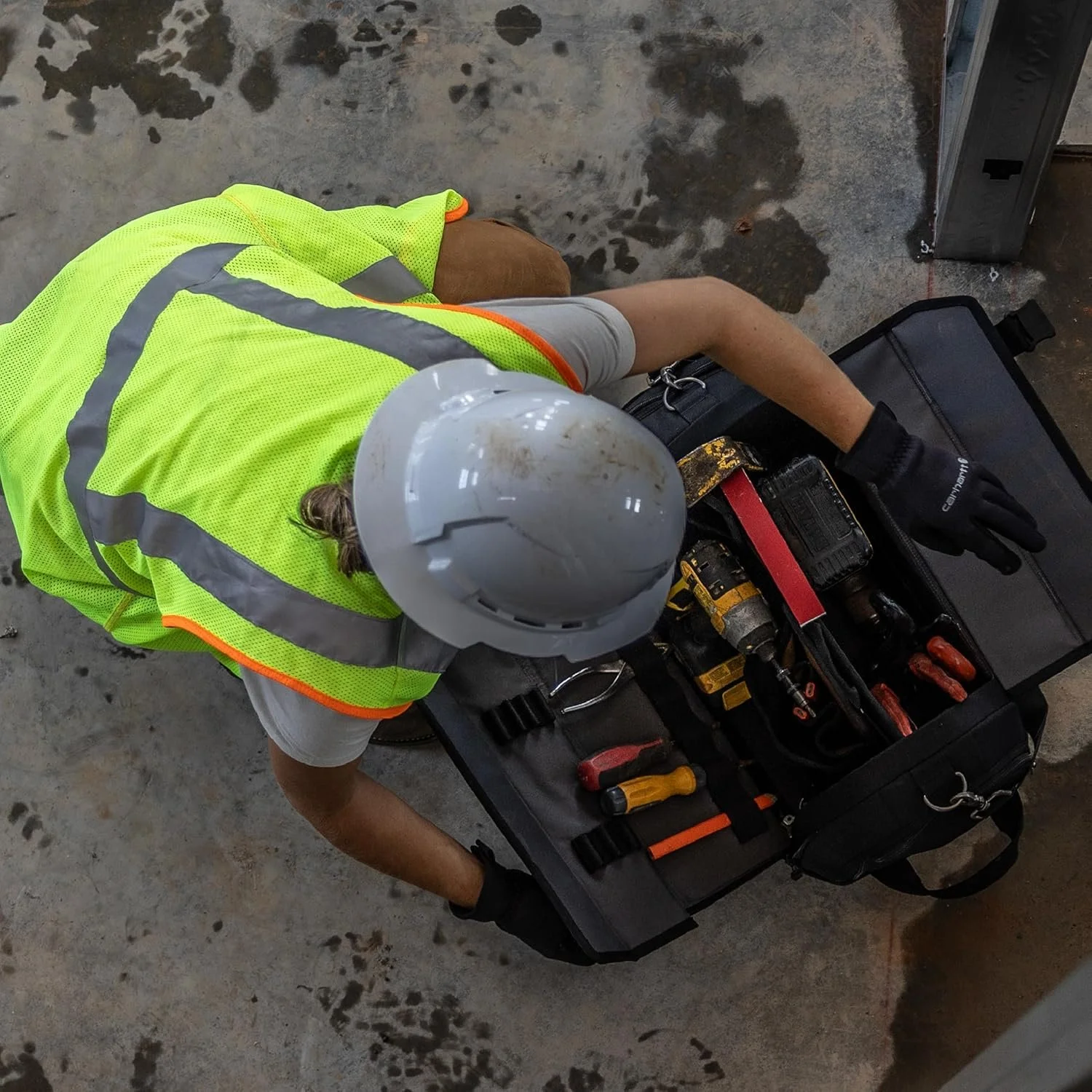
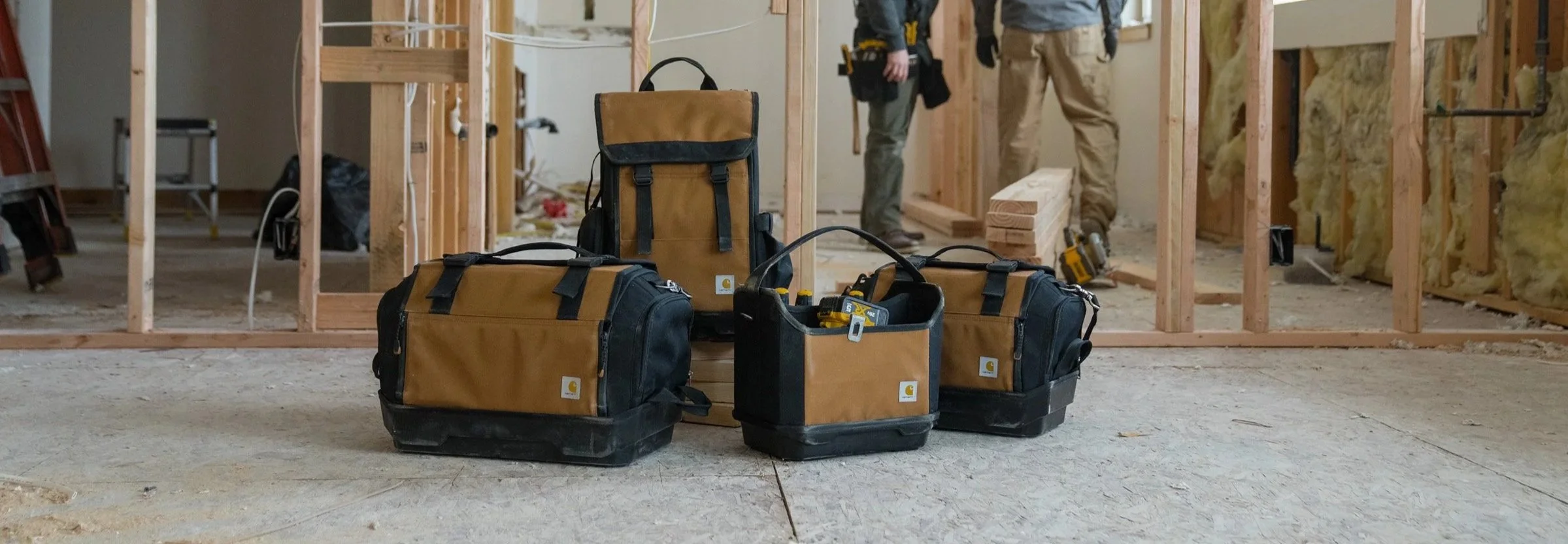
At Signature Products Group in Salt Lake City, Utah, I worked within the product development team to evolve Carhartt’s tool storage line into a more versatile and hardwearing system for tradespeople, DIYers, and everyday users alike. As a licensing partner, our role was not to simply apply a logo to existing product. We designed from the ground up through user research, focus groups, concept development, prototyping, 3D printing, tech pack creation, CMF exploration, vendor collaboration, and overseas factory visits.
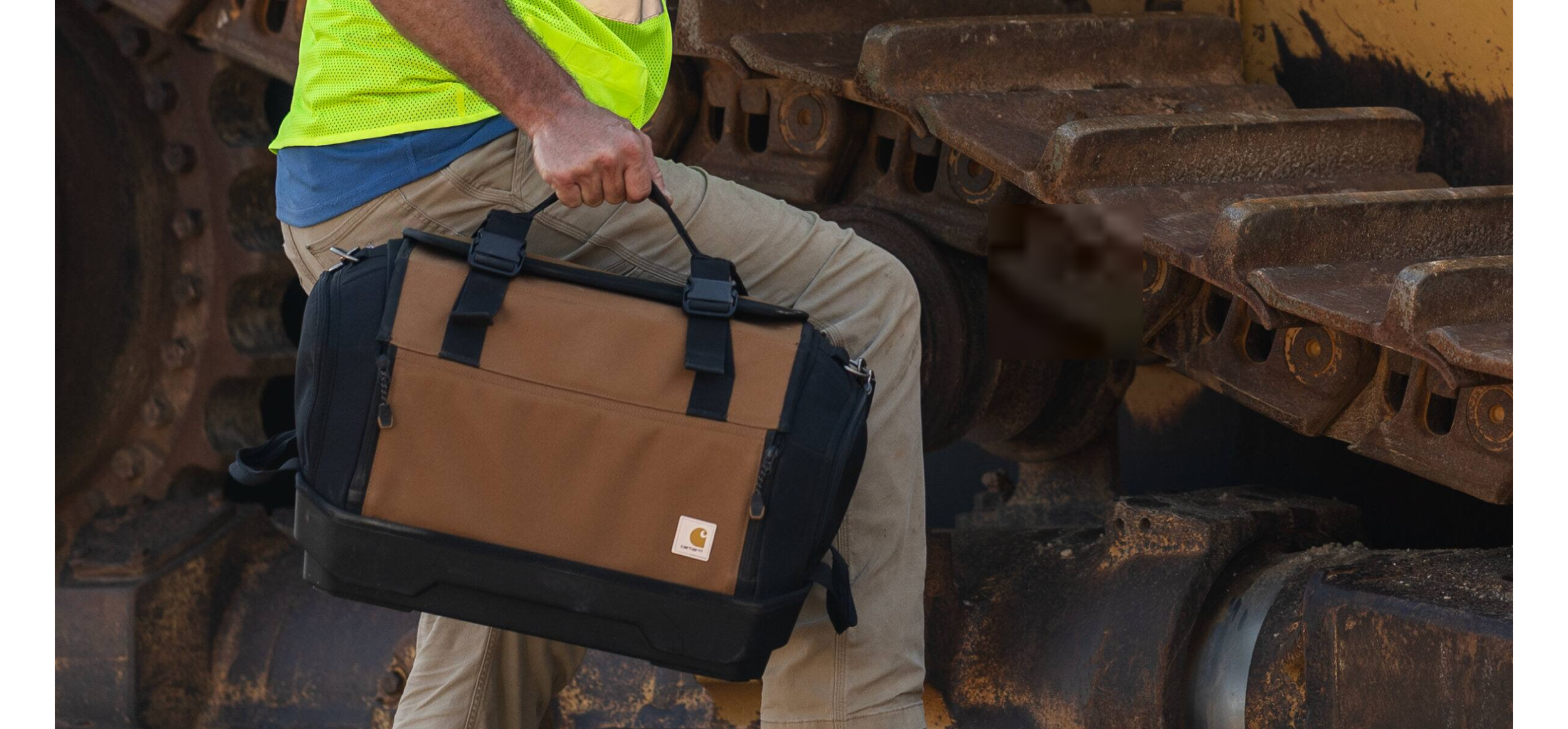
The nearly two-year process touched every stage of product development. I led concept work, visualization, 3D modeling, and key portions of vendor communication while supporting tech packs and CMF direction across a complex family of hybrid hardgoods and softgoods. The goal was to turn an already successful line of tool bags into a more modern, durable, and ownable storage system with better organization, broader use cases, and a stronger presence at retail. The result was a family of four modular bags (plus a harness).
Landscape Immersion
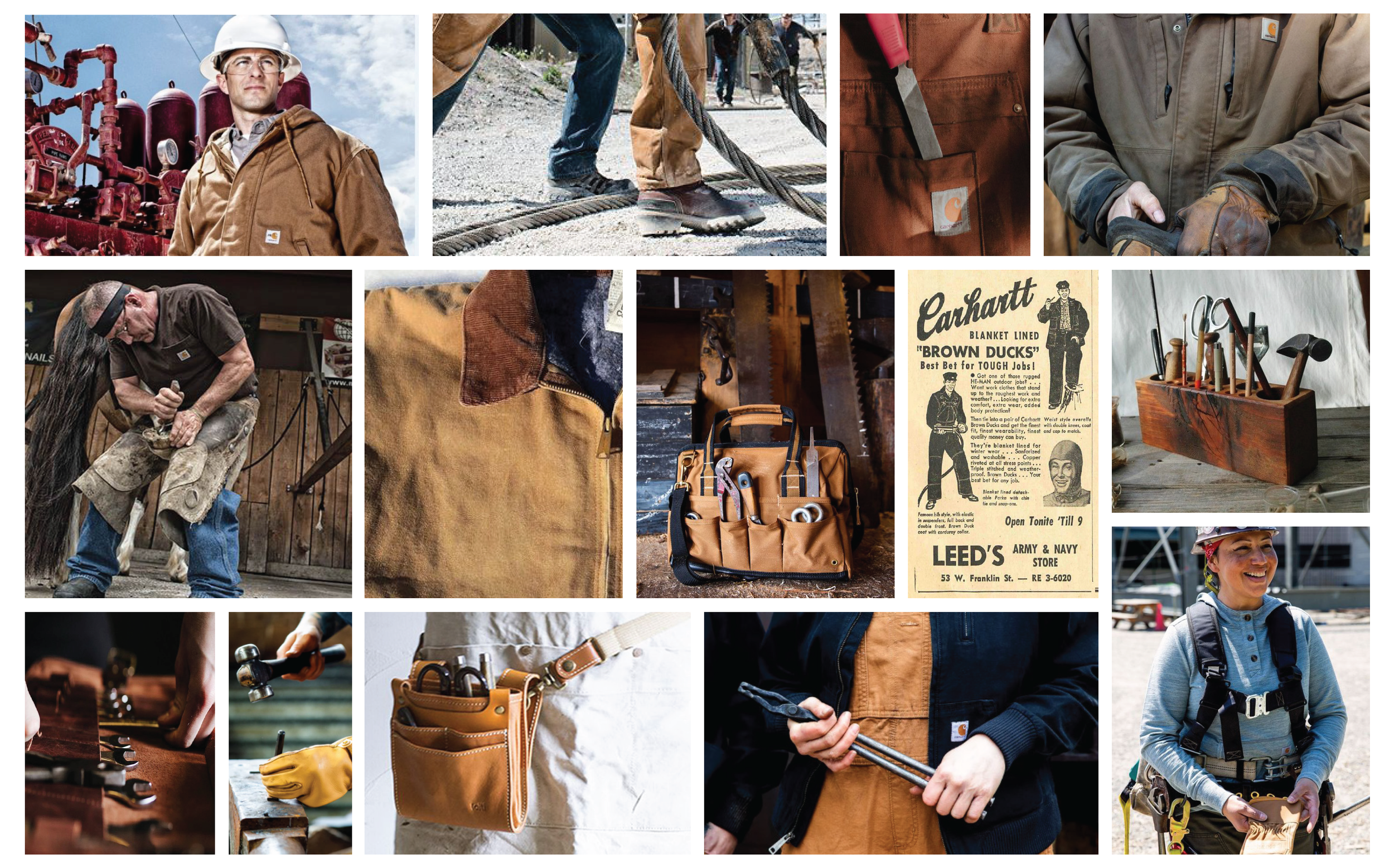
Before jumping into concepts, I spent time understanding where Carhartt had been, where the tool category was headed, and where there was room to push. Through competitive research, product audits, insights, and visual moodboarding, I built a foundation that helped clarify the bigger opportunity.
This phase was about asking the right questions early:
Who is the next generation of tool users?
How do we design for them without losing the core customer?
What forms, features, and details communicate durability, usefulness, and longevity while still standing out on shelf?
Where are current solutions falling short?
Initial Exploration
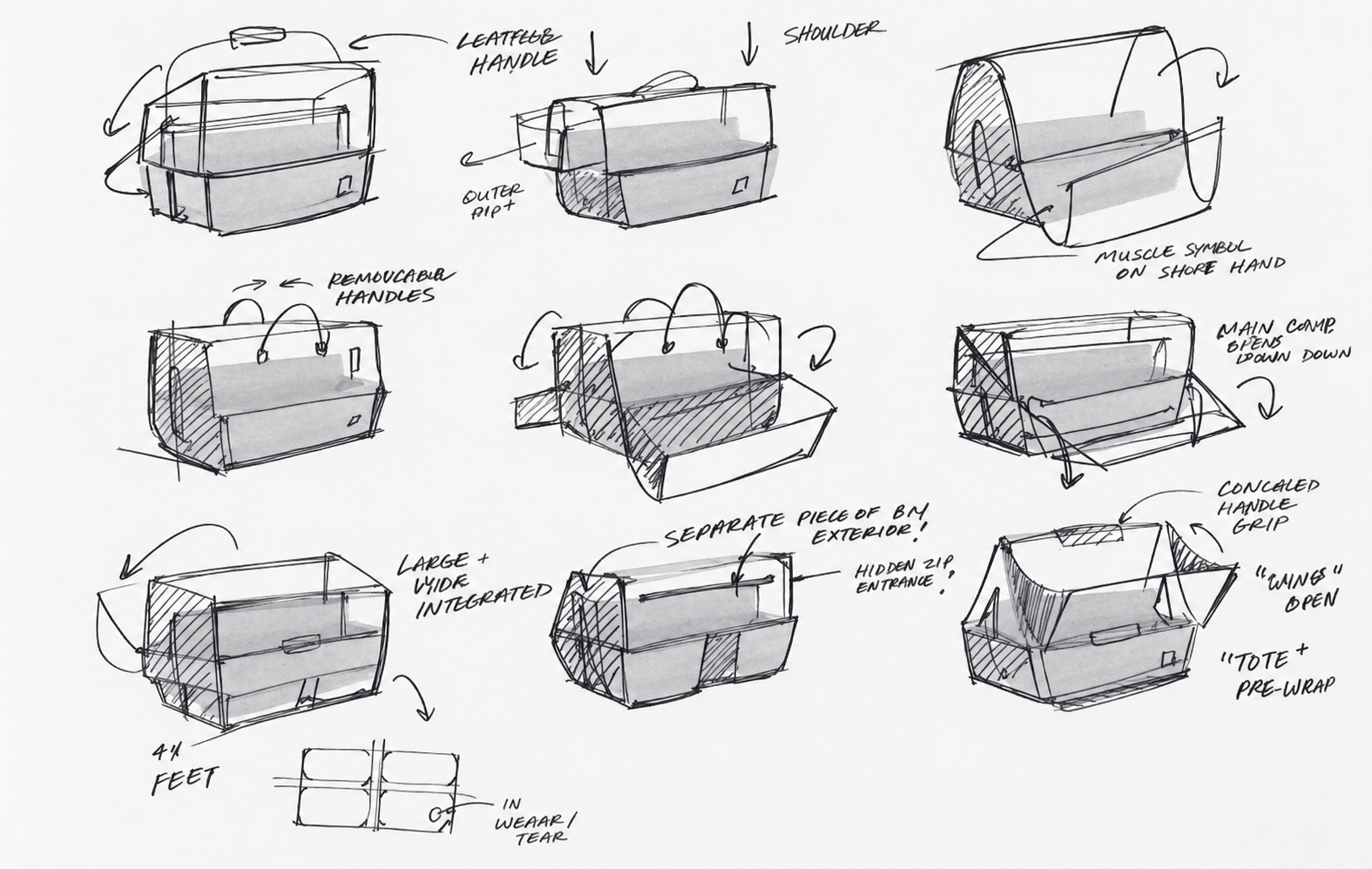
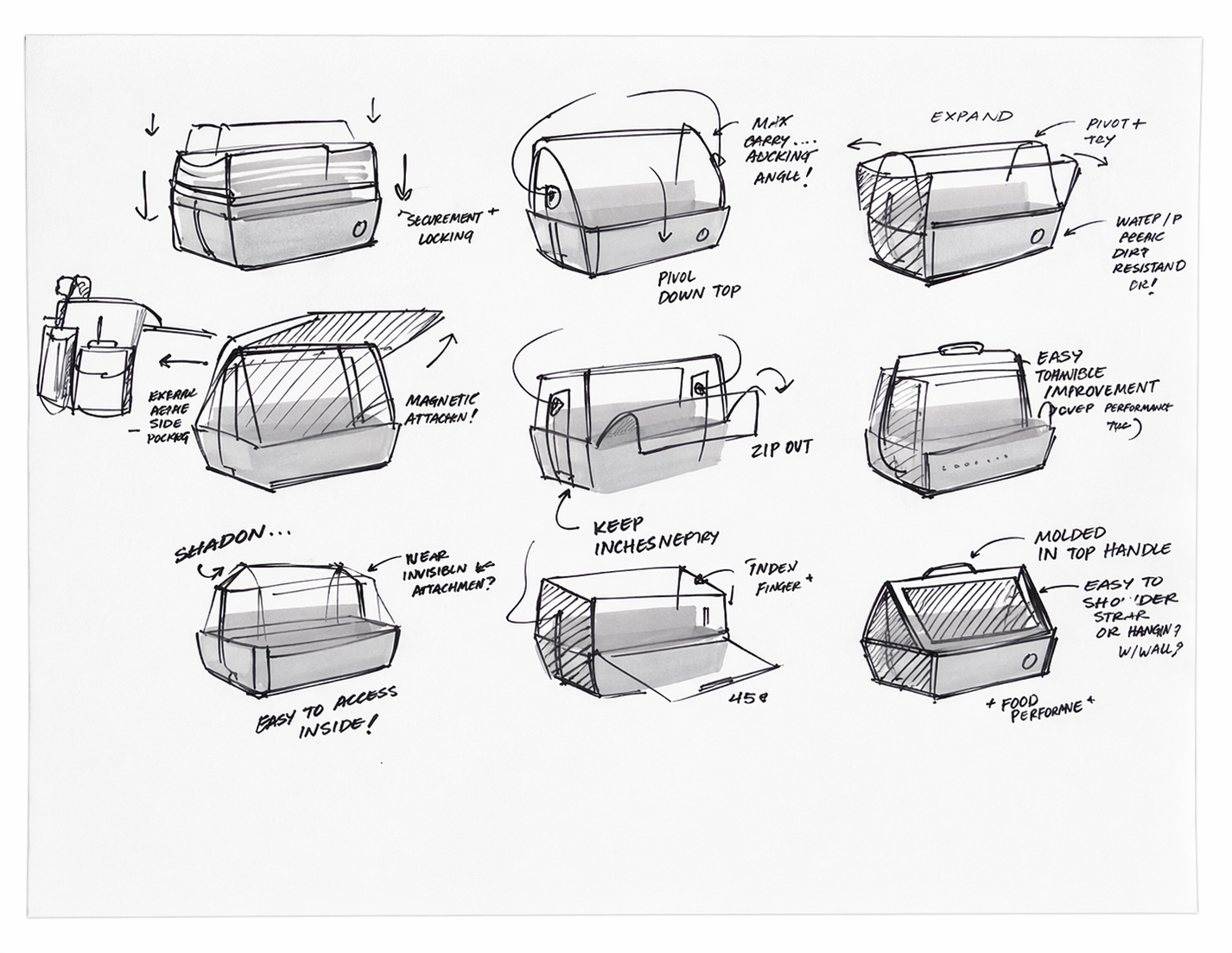
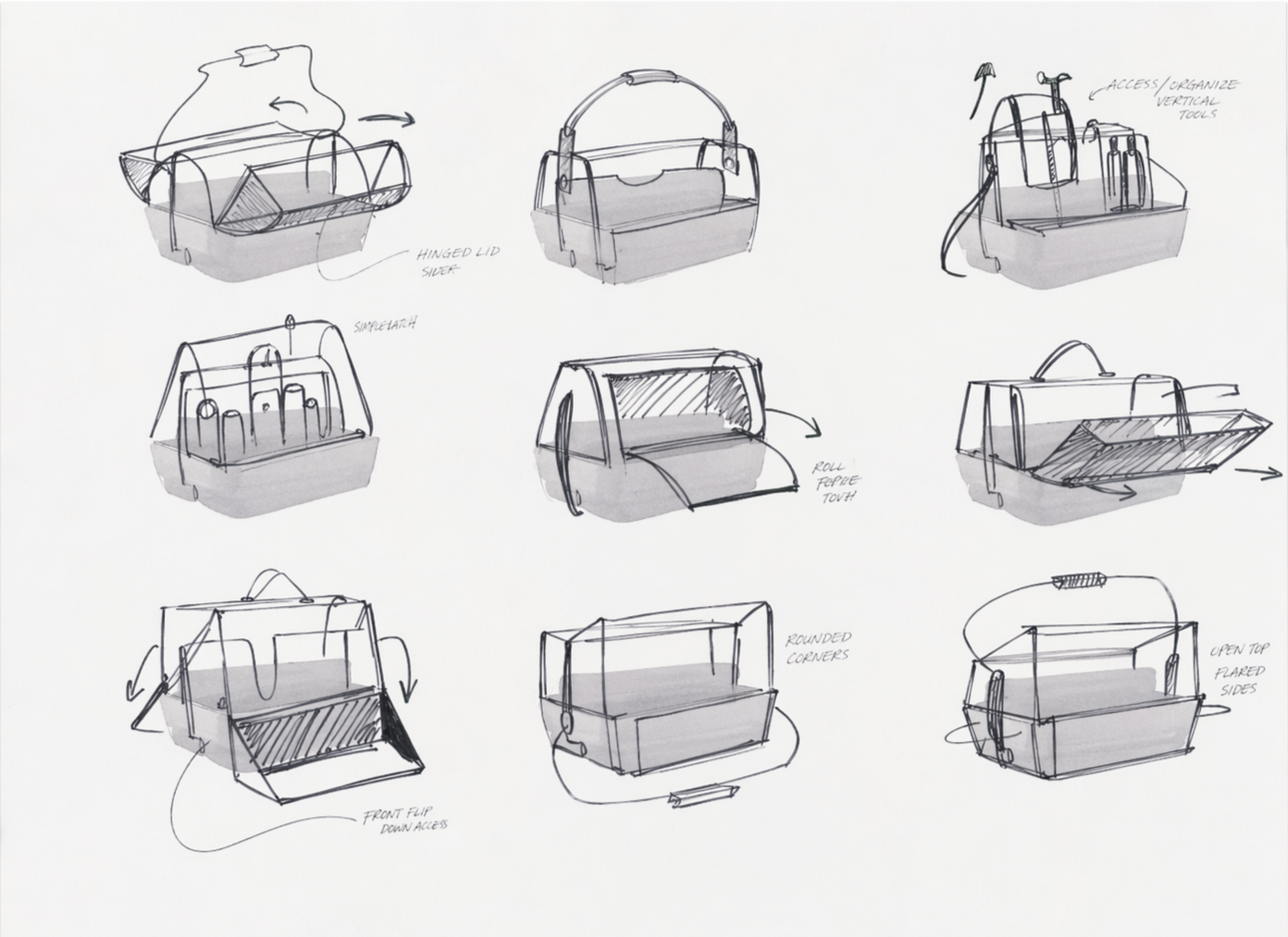
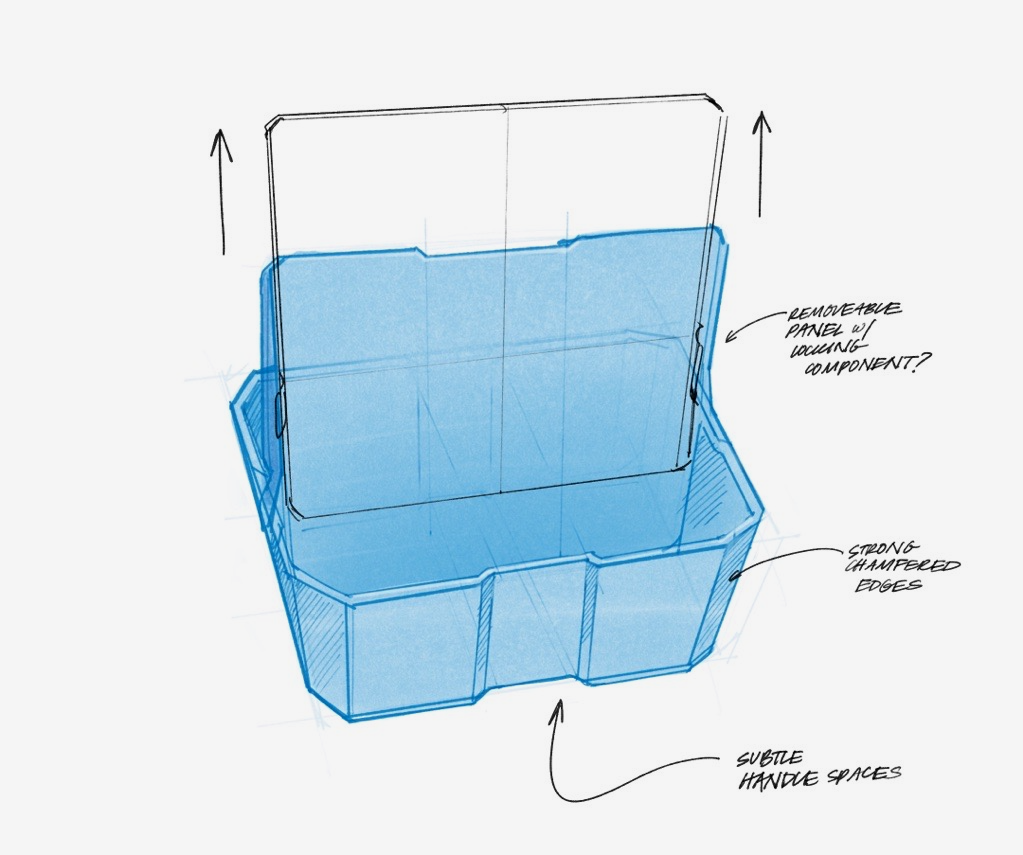
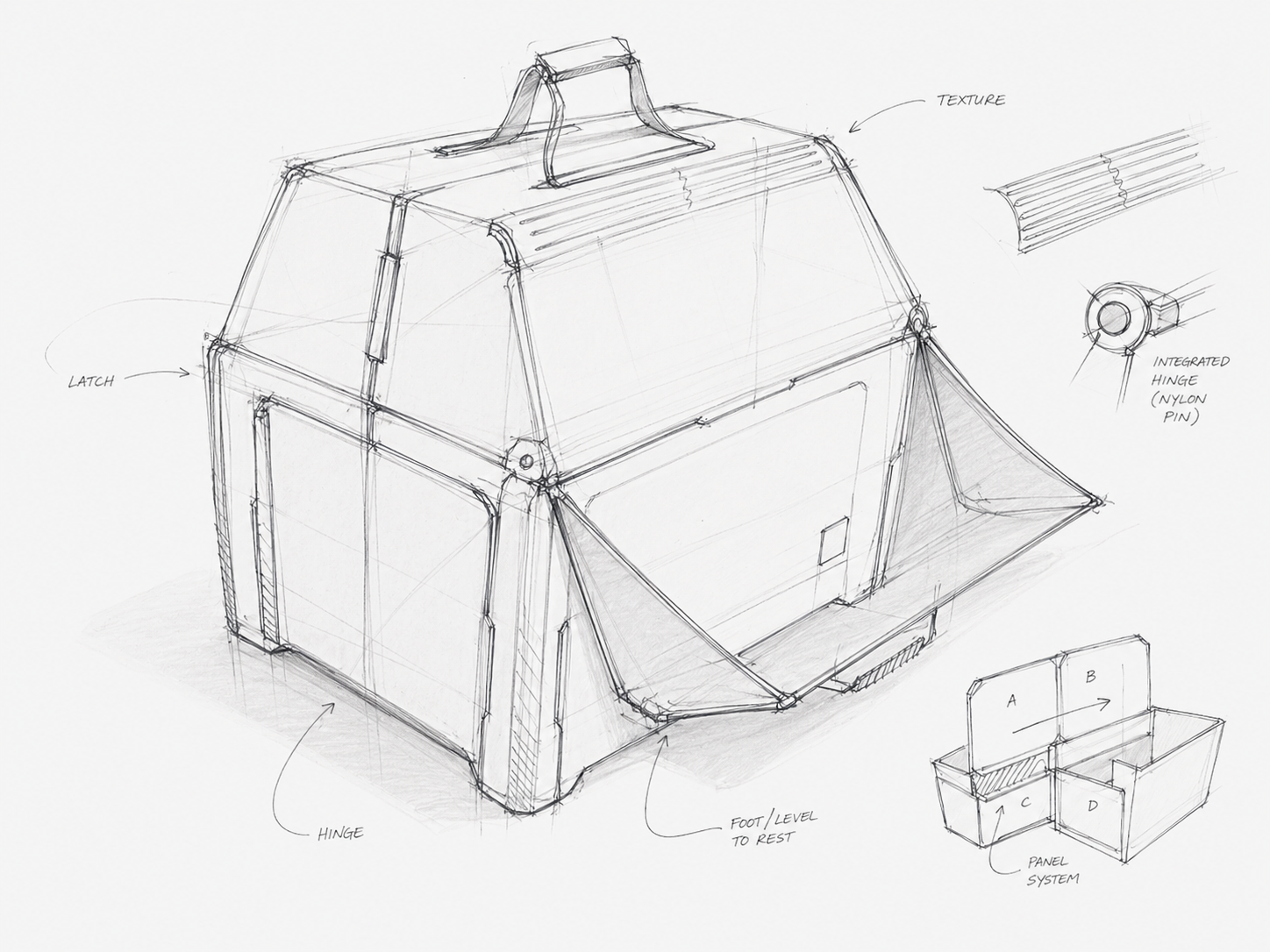
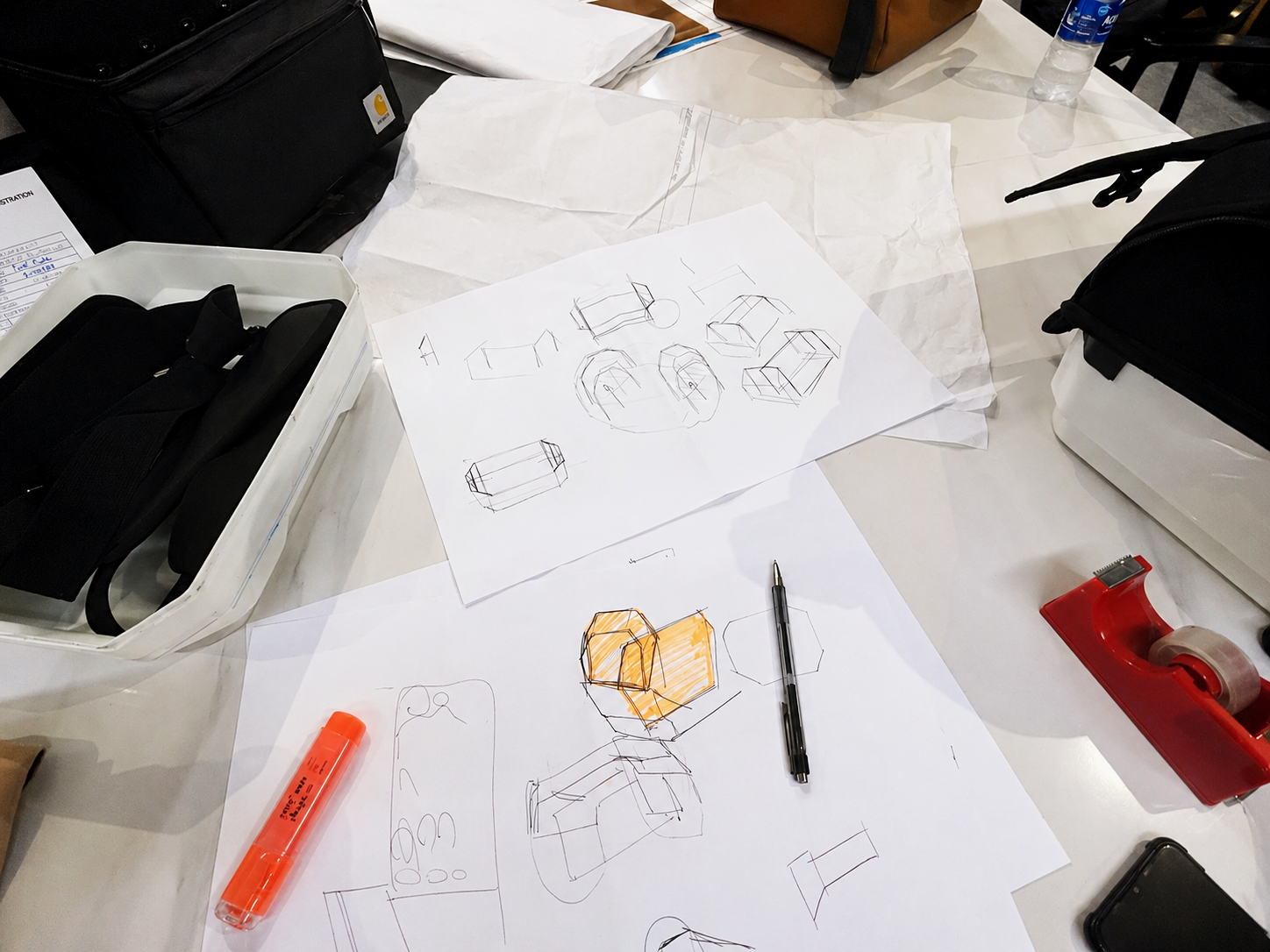
From there, I moved into form & system exploration to start translating the research into product language. This phase was less about landing on a final answer and more about testing directions quickly: proportions, silhouettes, openings, handles, access points, and how the product could feel both familiar and new.
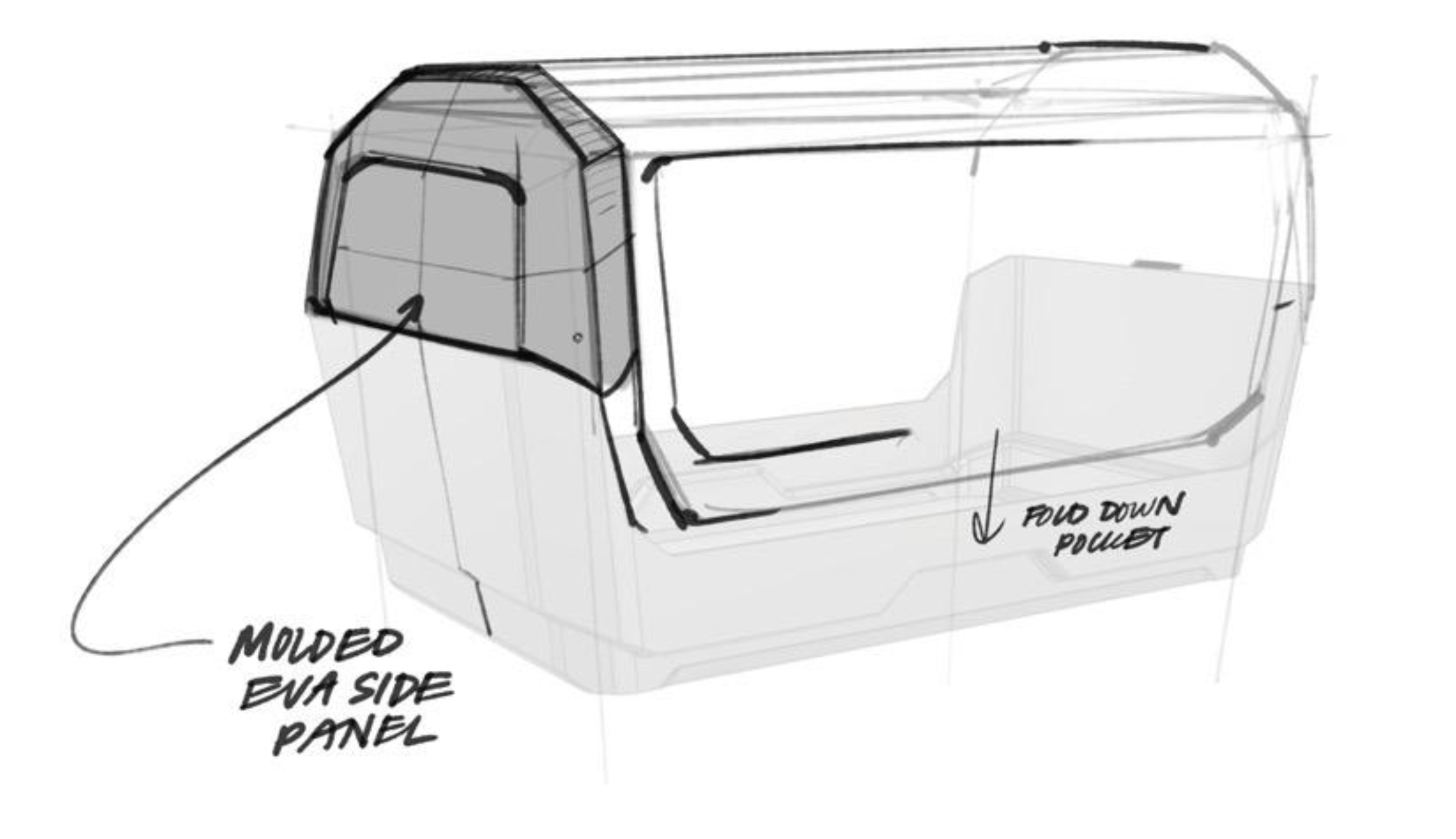
In particular, I focused on one of the core pieces of the brief: how might we incorporate a rugged, molded base that would provide structure and visual identity? By using a basic 3D mockup to iterate over, I was better able to explore the intersection of hardgood and sotfgood with unique opening systems.
Rough Prototypes
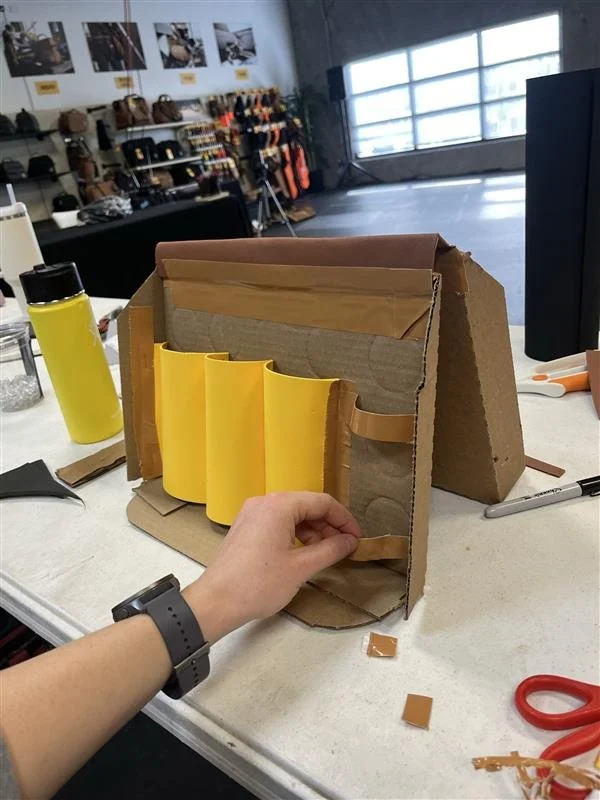
To start pressure-testing the concepts, I moved into rough prototyping wiht the development team. These quick mockups helped me explore proportion, structure, opening systems, and and modularity in a more tangible way.
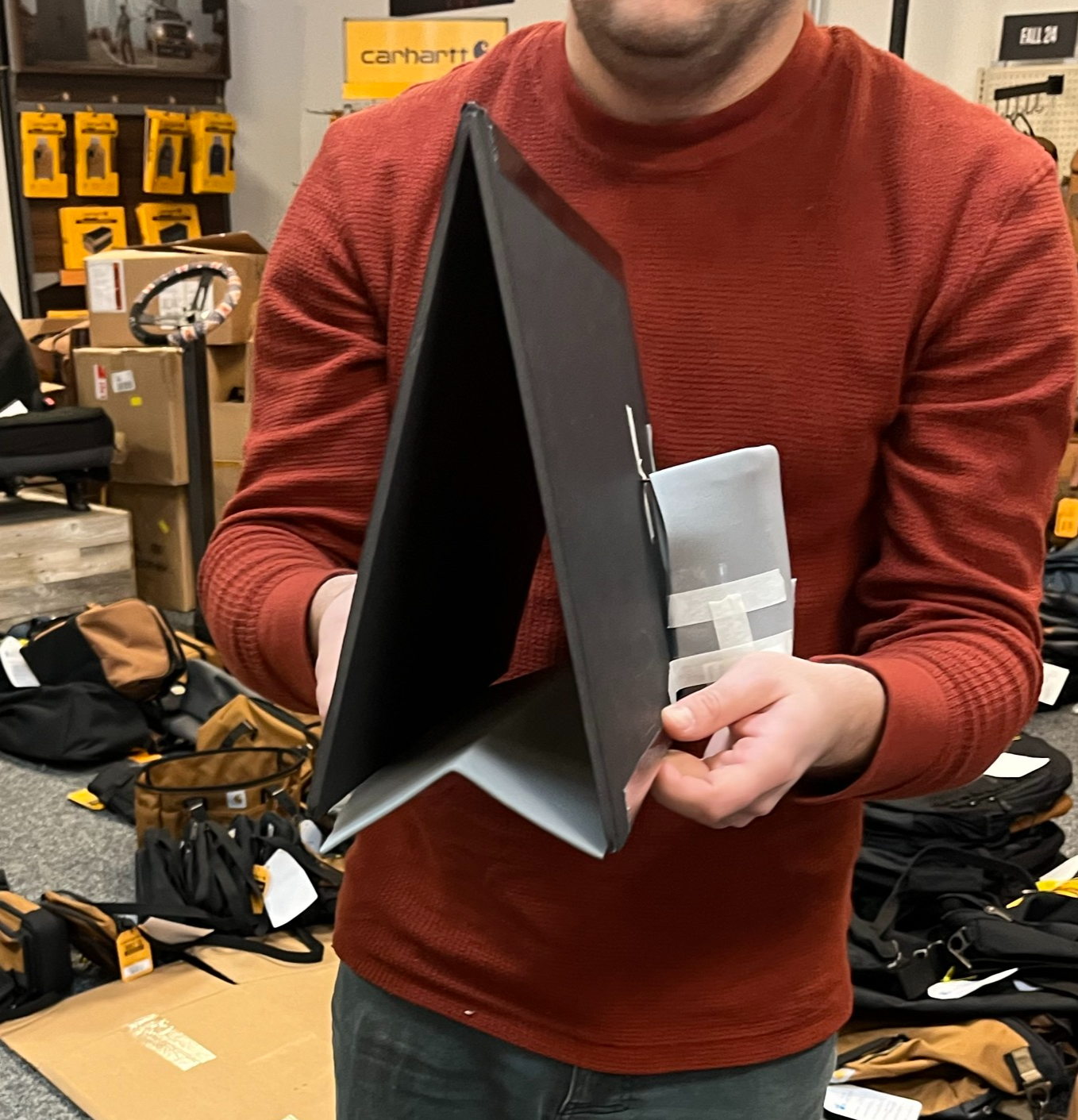
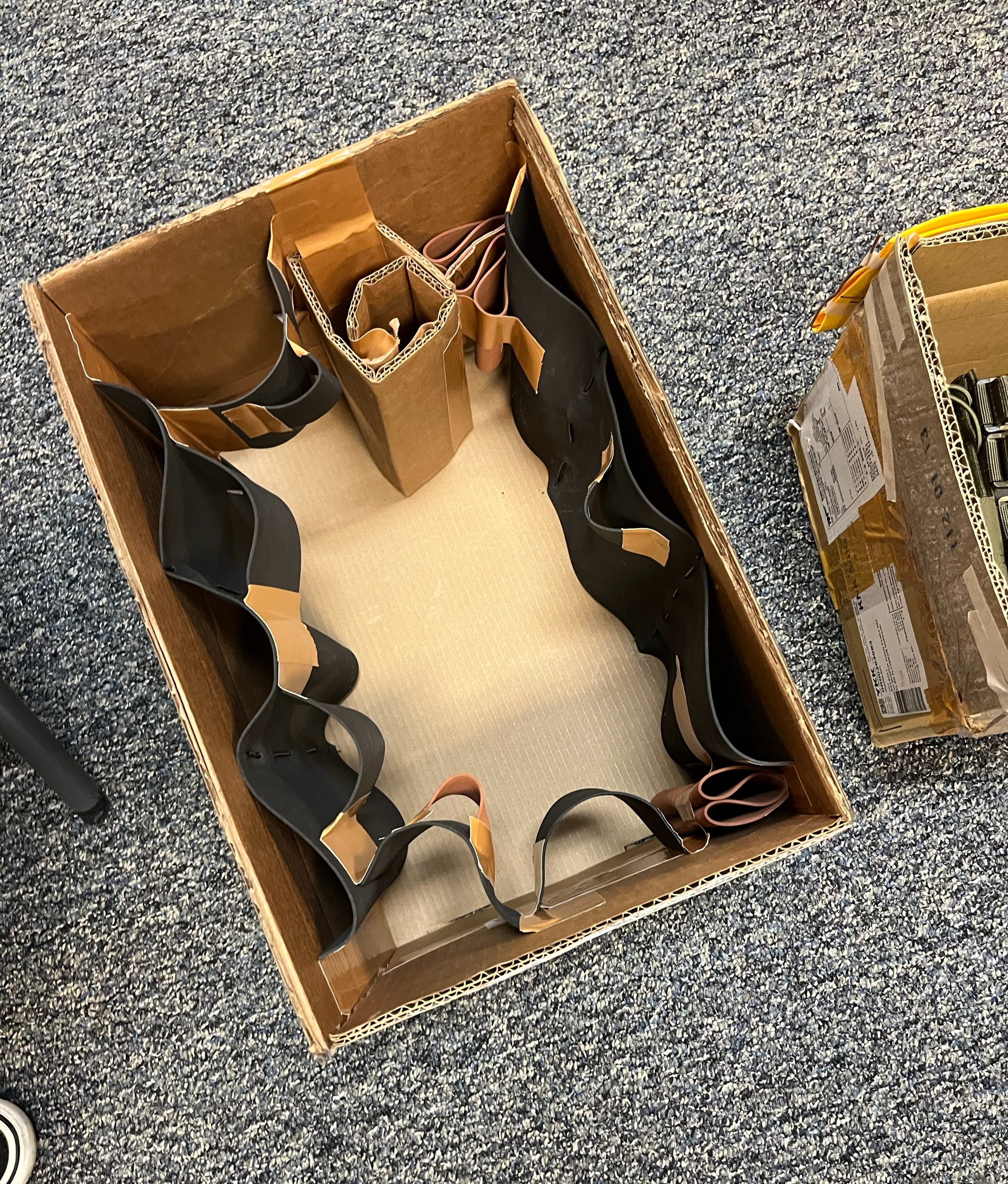
concept refinement
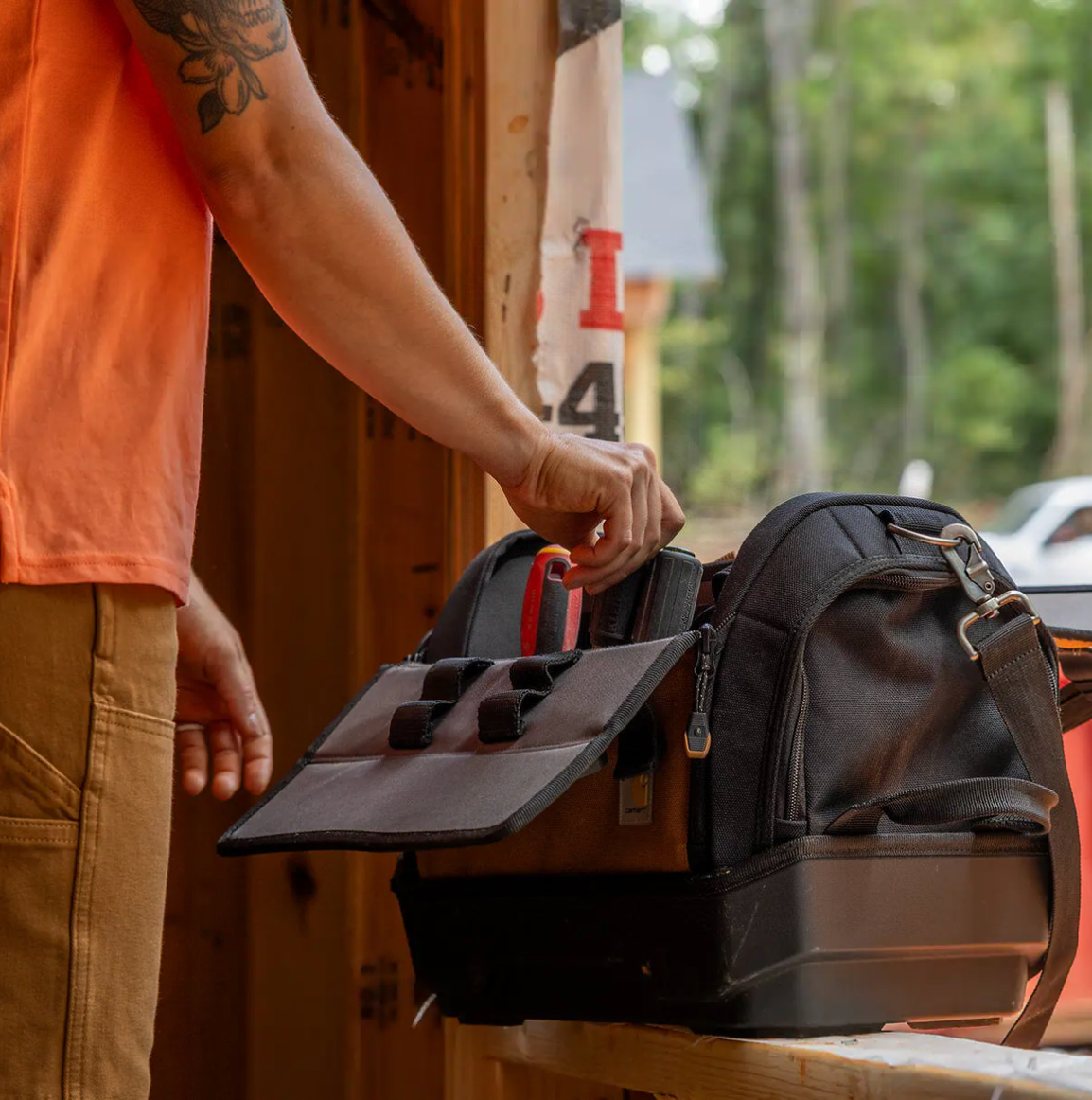
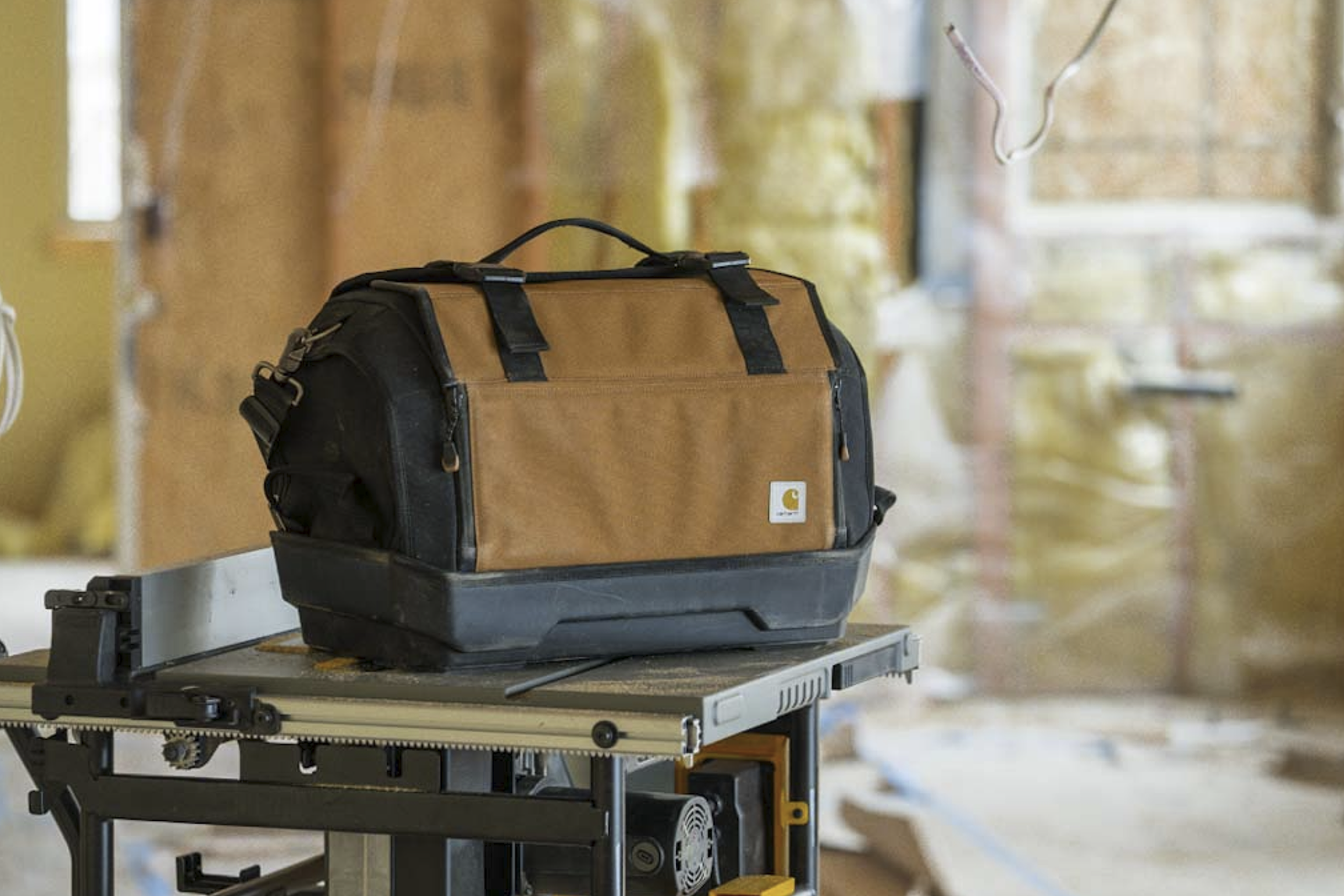
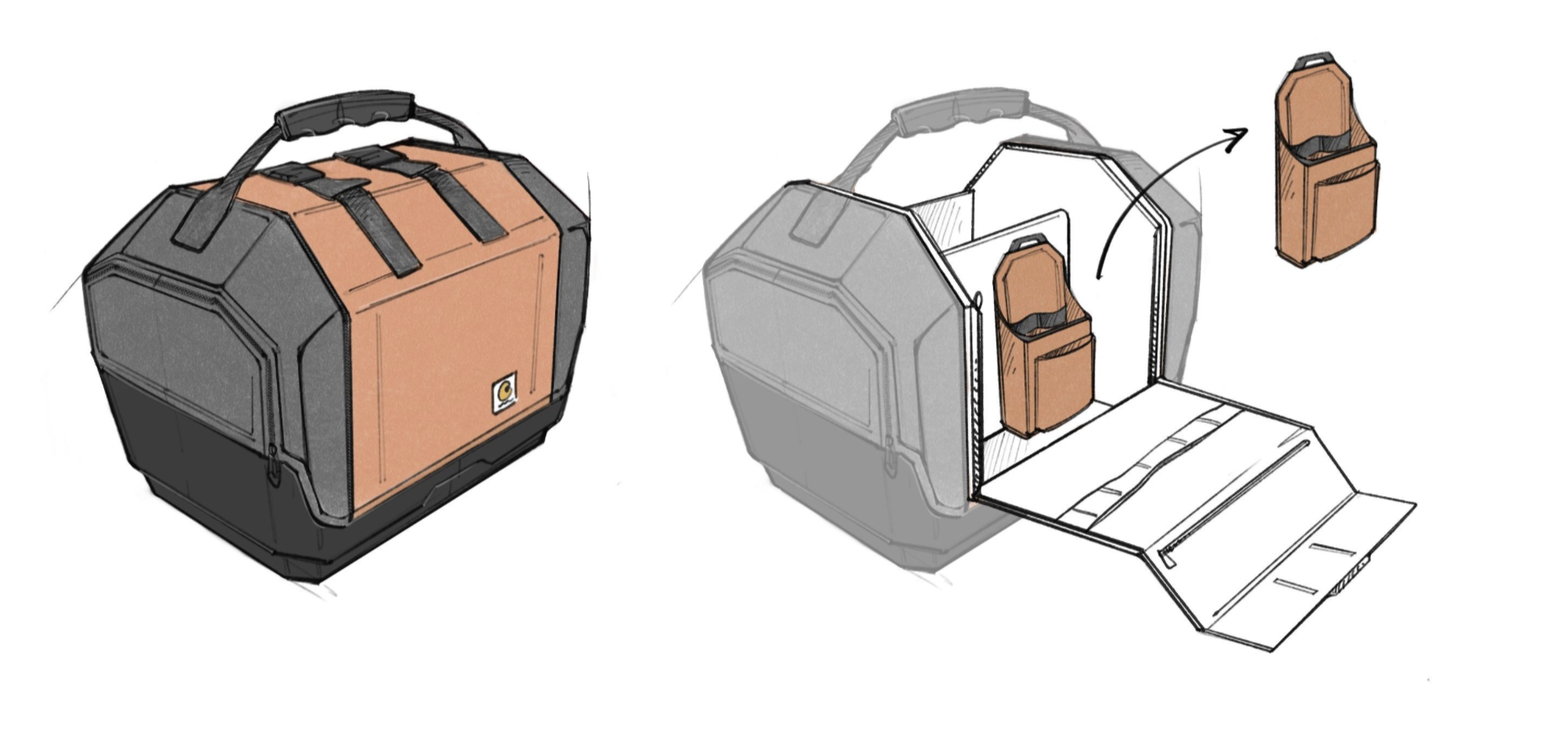
From there, the form started to take shape: a molded base with an upper opening that could function as both versatile storage and a display space for small parts. As the 3D model developed, so did a unique softgood component that moved away from both the traditional “doctor bag” tool bag and the purely boxy silhouettes common on shelf.
The direction took cues from old-school wooden tool carry trays, especially the idea of a central divider that could receive and organize modular pouches. The goal was to create a flexible system that wasn’t tied to one specific trade, but could carry both large and small tools while still delivering the durability consumers expect from Carhartt.
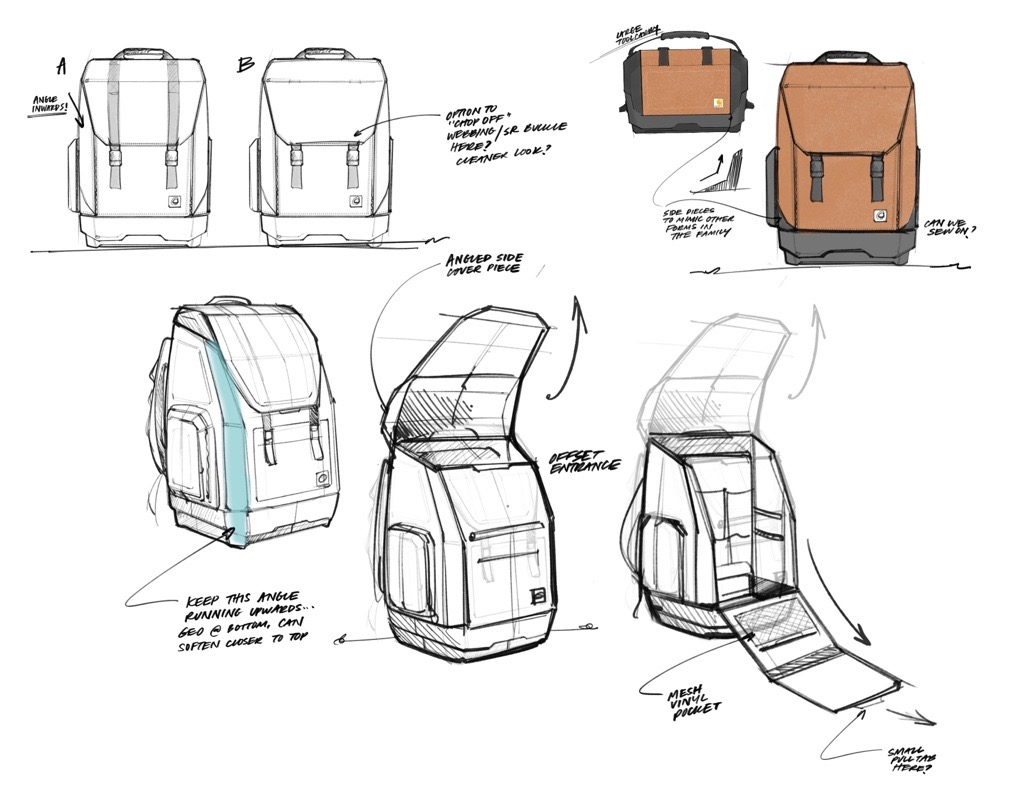
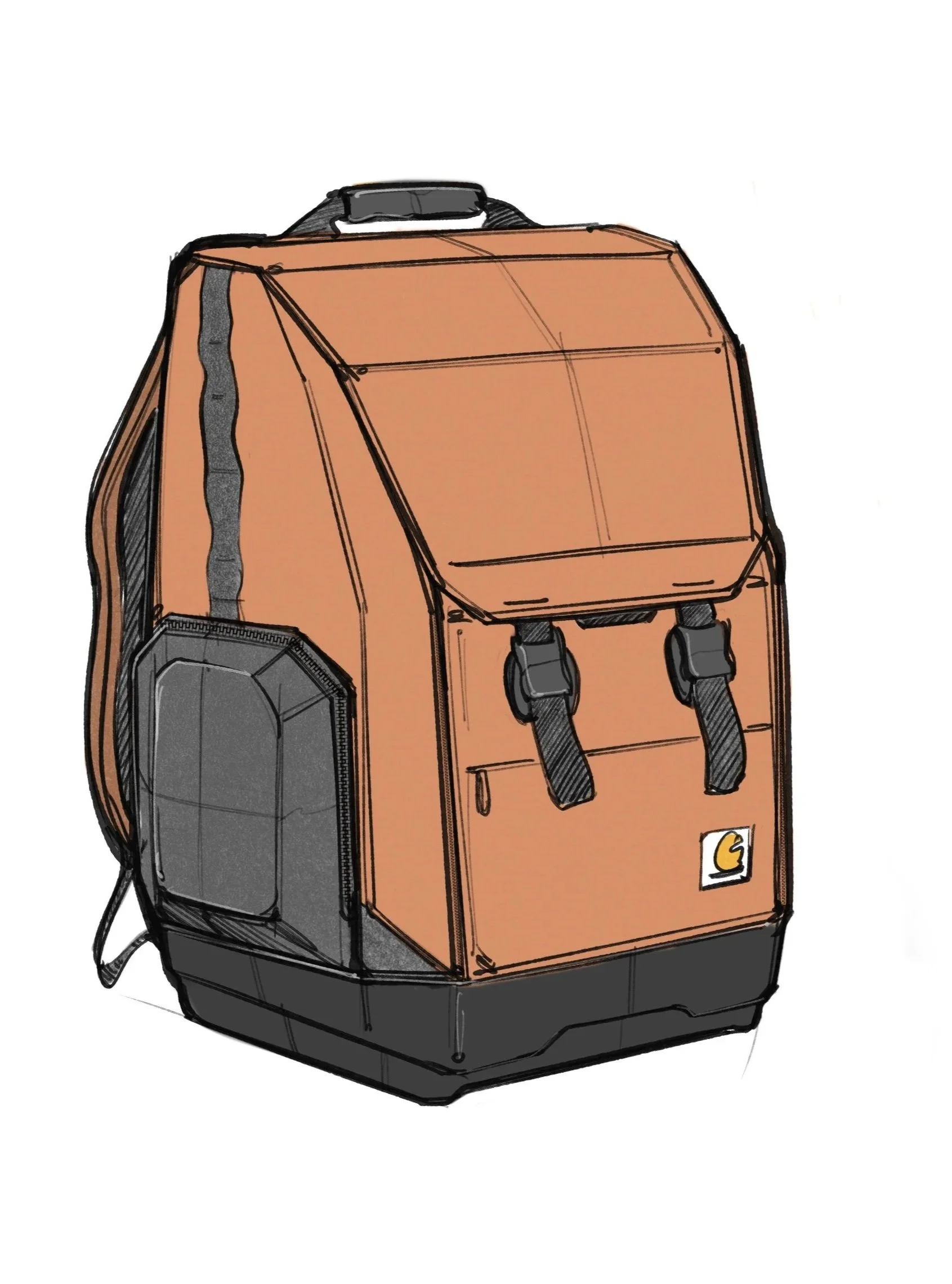
While the main tool bag iteration developed, I continued concept work on the other sized bags and backpack.
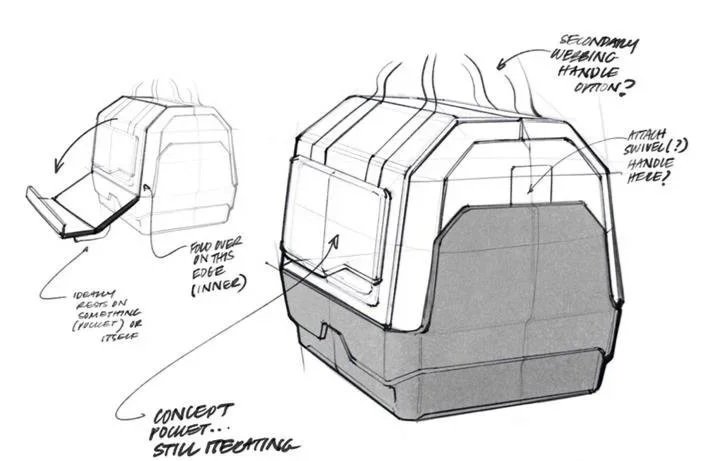
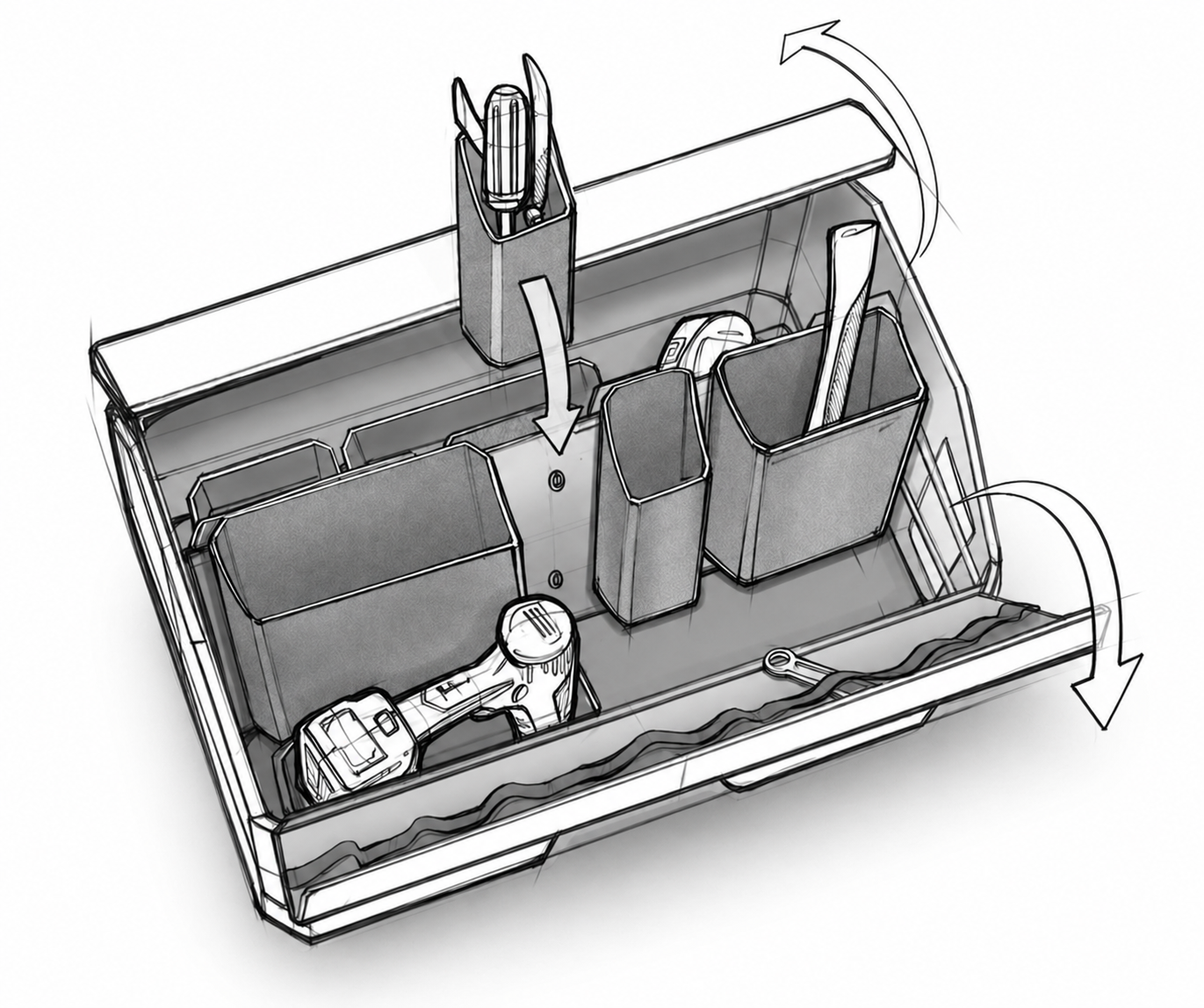
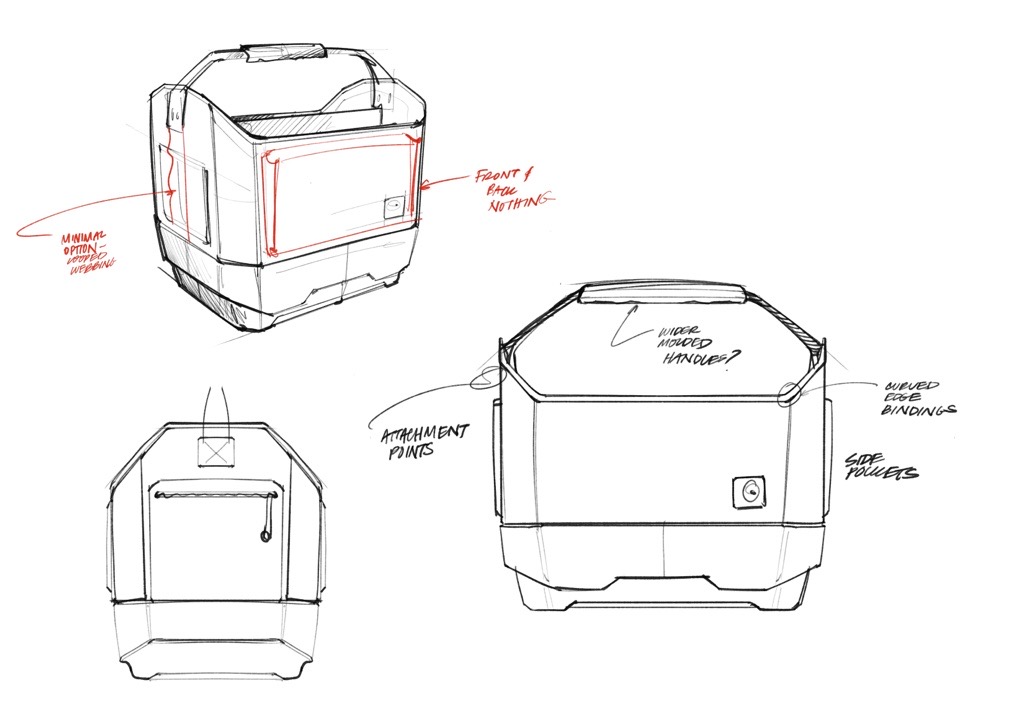
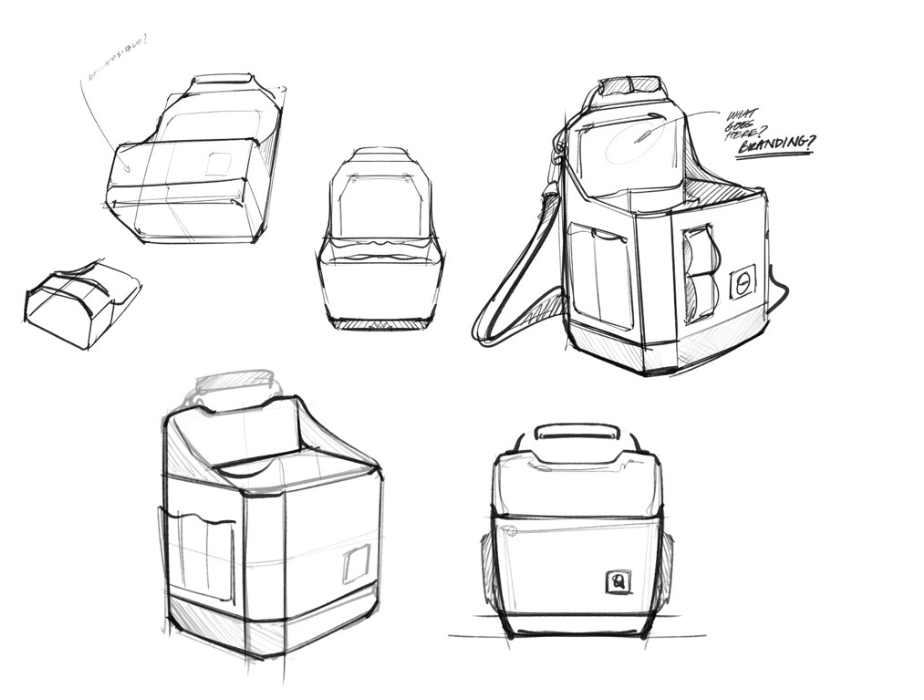
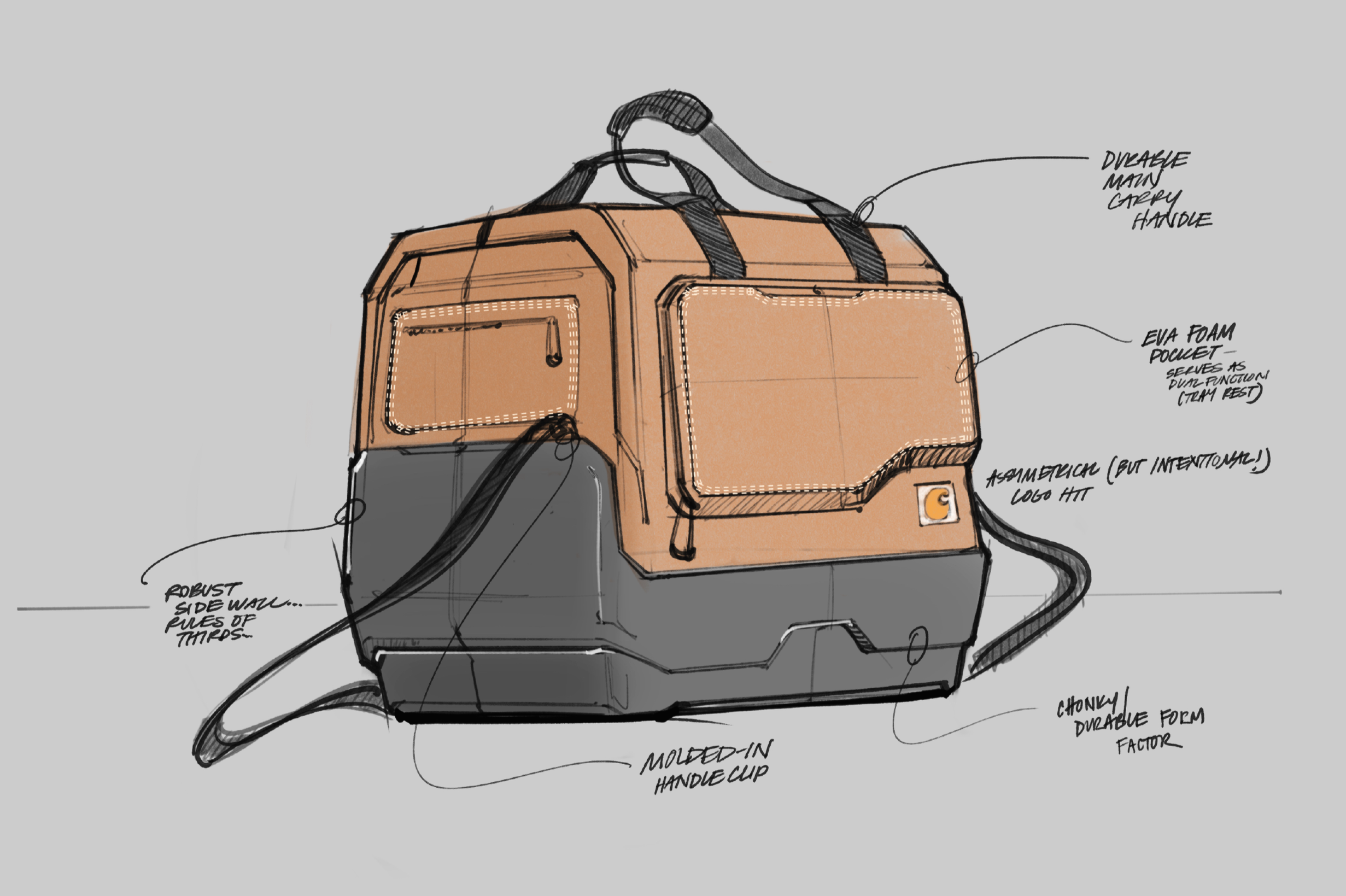
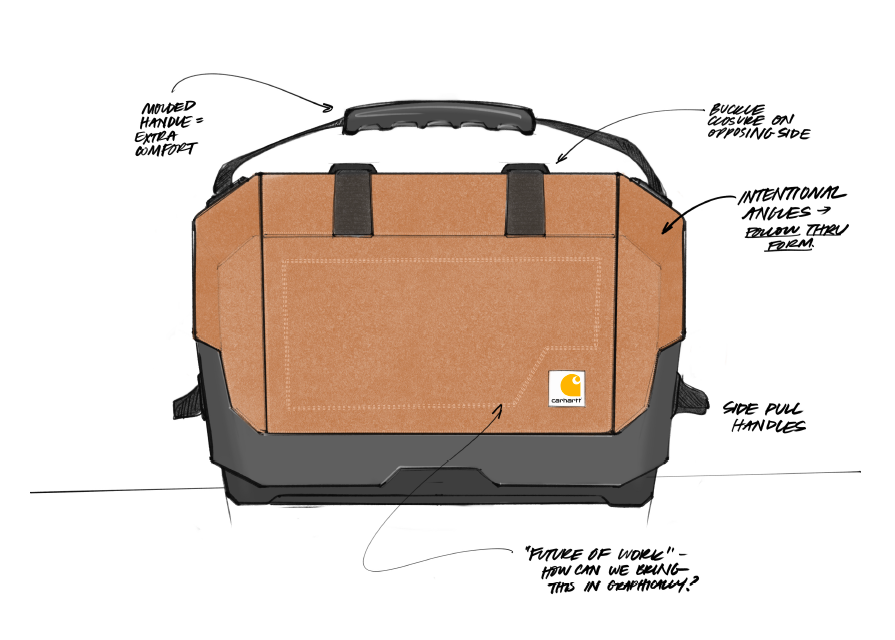
3d exploration
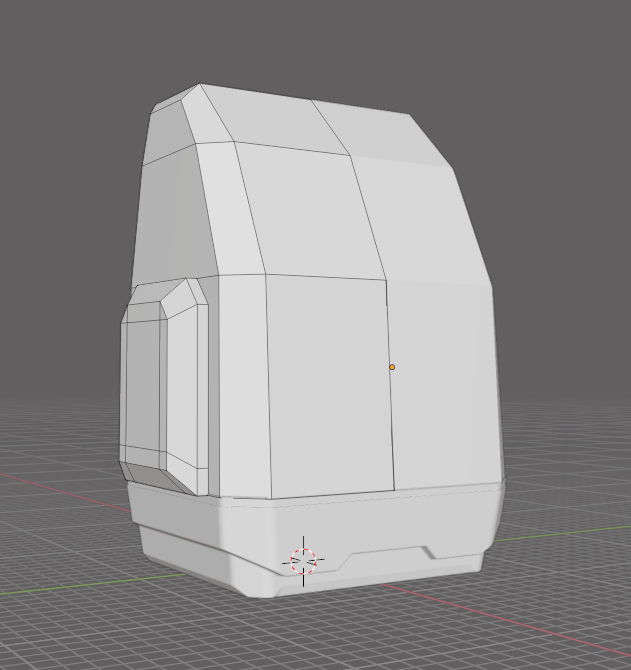
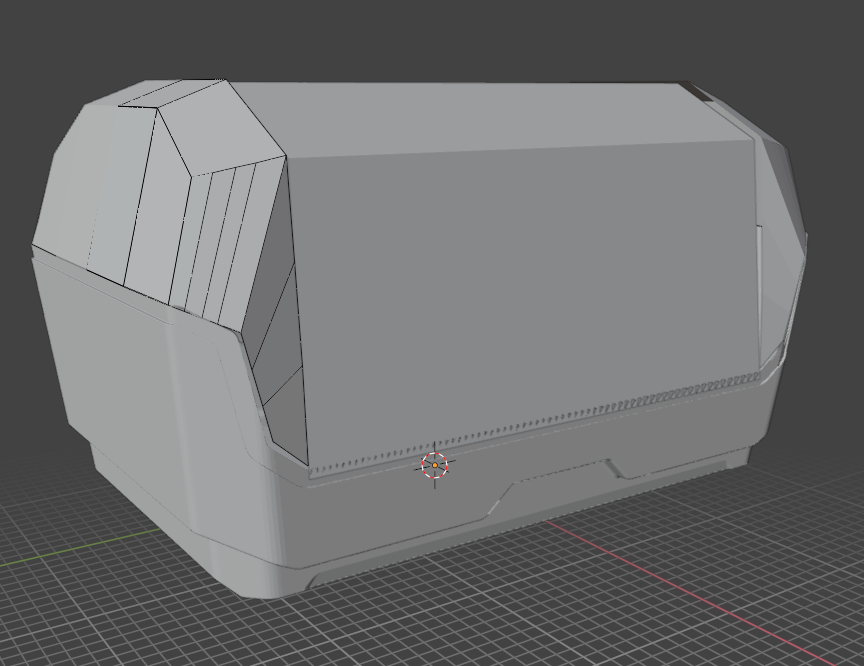
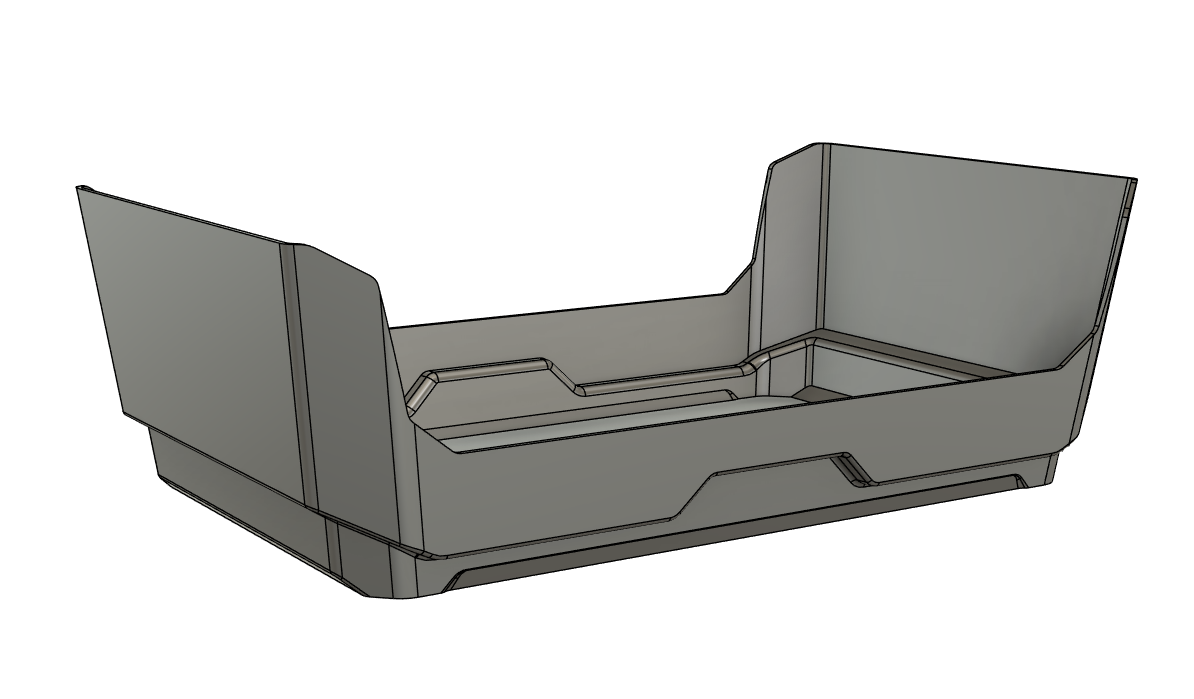
Using Fusion 360, Blender, and a mix of modeling tools, I moved into 3D to better understand how the hardgood and softgood elements could work together. I transferred models across programs, tested proportions, and explored how a molded base could integrate with a softer, chamfered upper structure.
The goal was to create something durable and timeless, but still modern and approachable. Throughout this phase, I focused on dimensions, ergonomics, opening behavior, and the types of tools the system needed to carry and protect.
tech pack development, factory visits + sample refinement
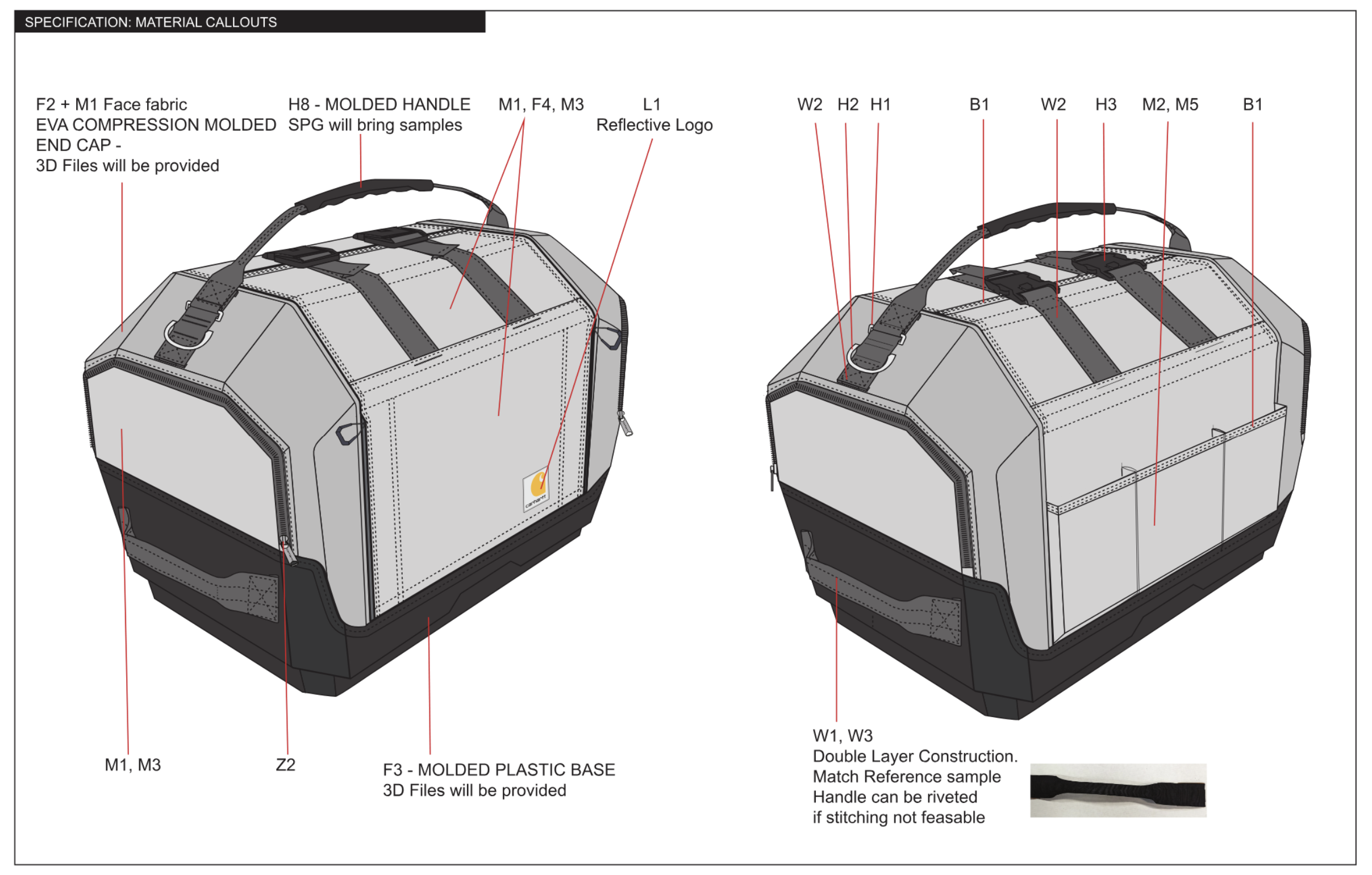
As the concept moved into development, I stayed closely involved in the details that would bring the product to life. While the product developer on our team owned the tech packs, I reviewed and contributed to them throughout the process, helping clarify construction details, proportions, feature intent, and how the hardgood and softgood elements needed to come together.
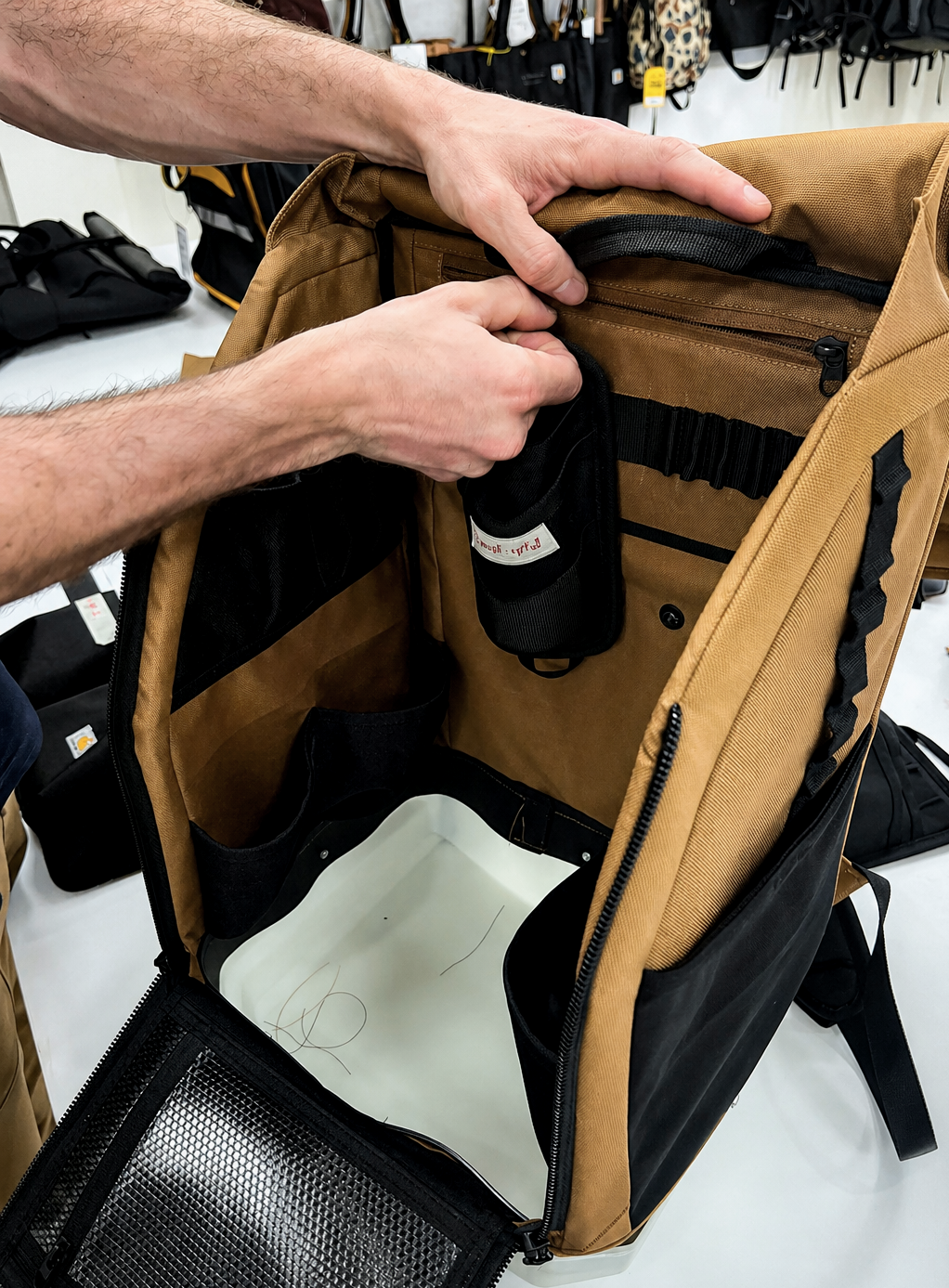
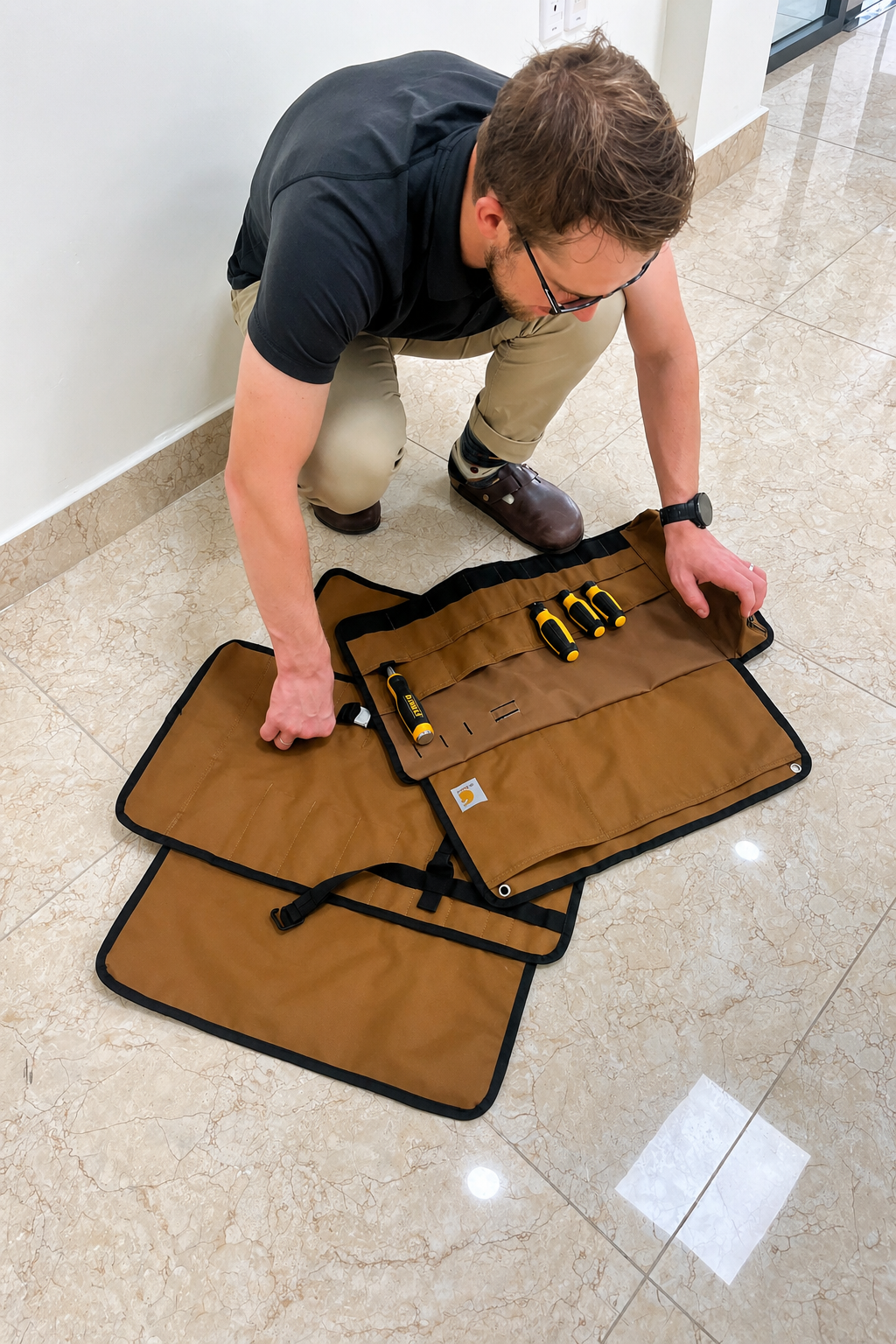
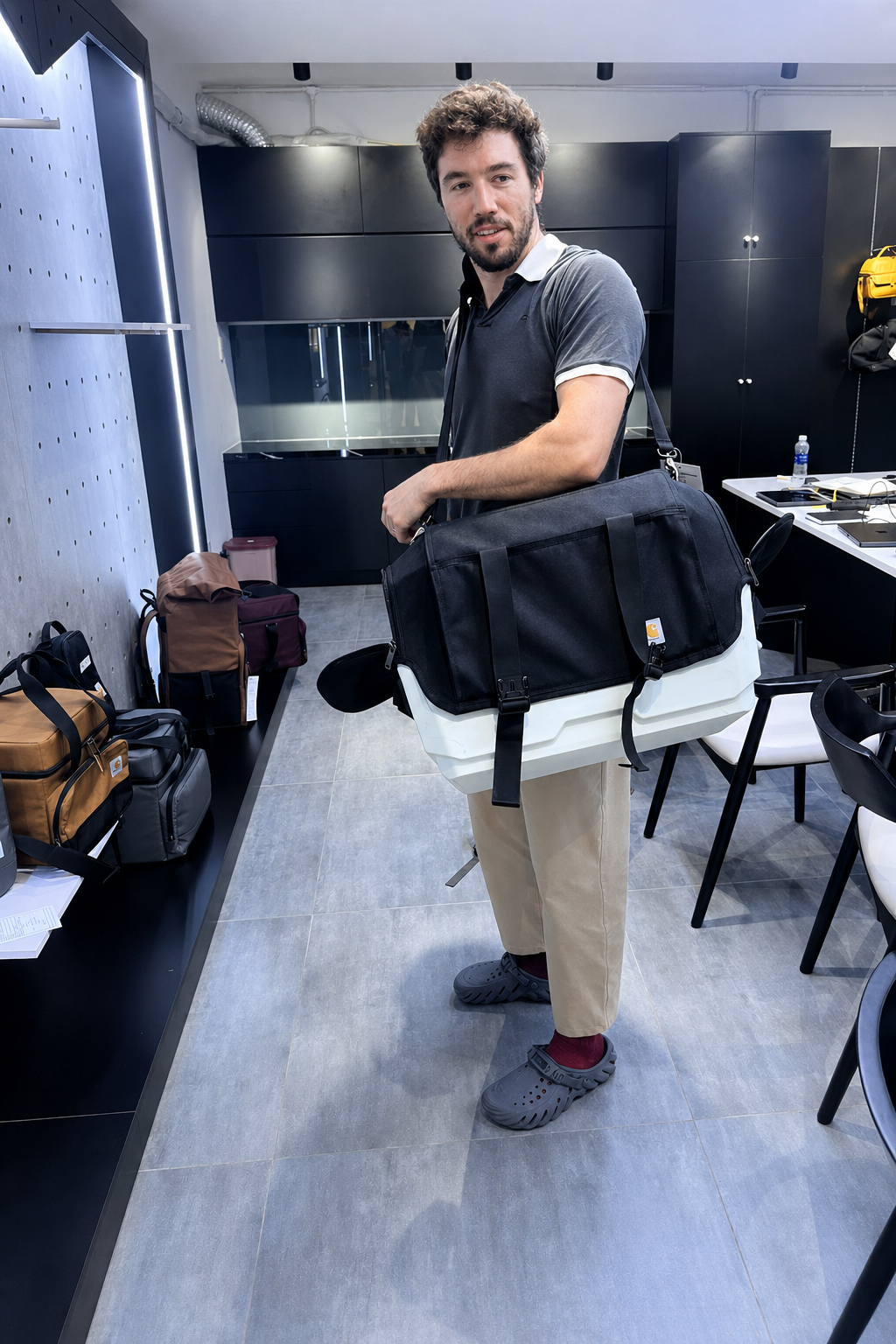
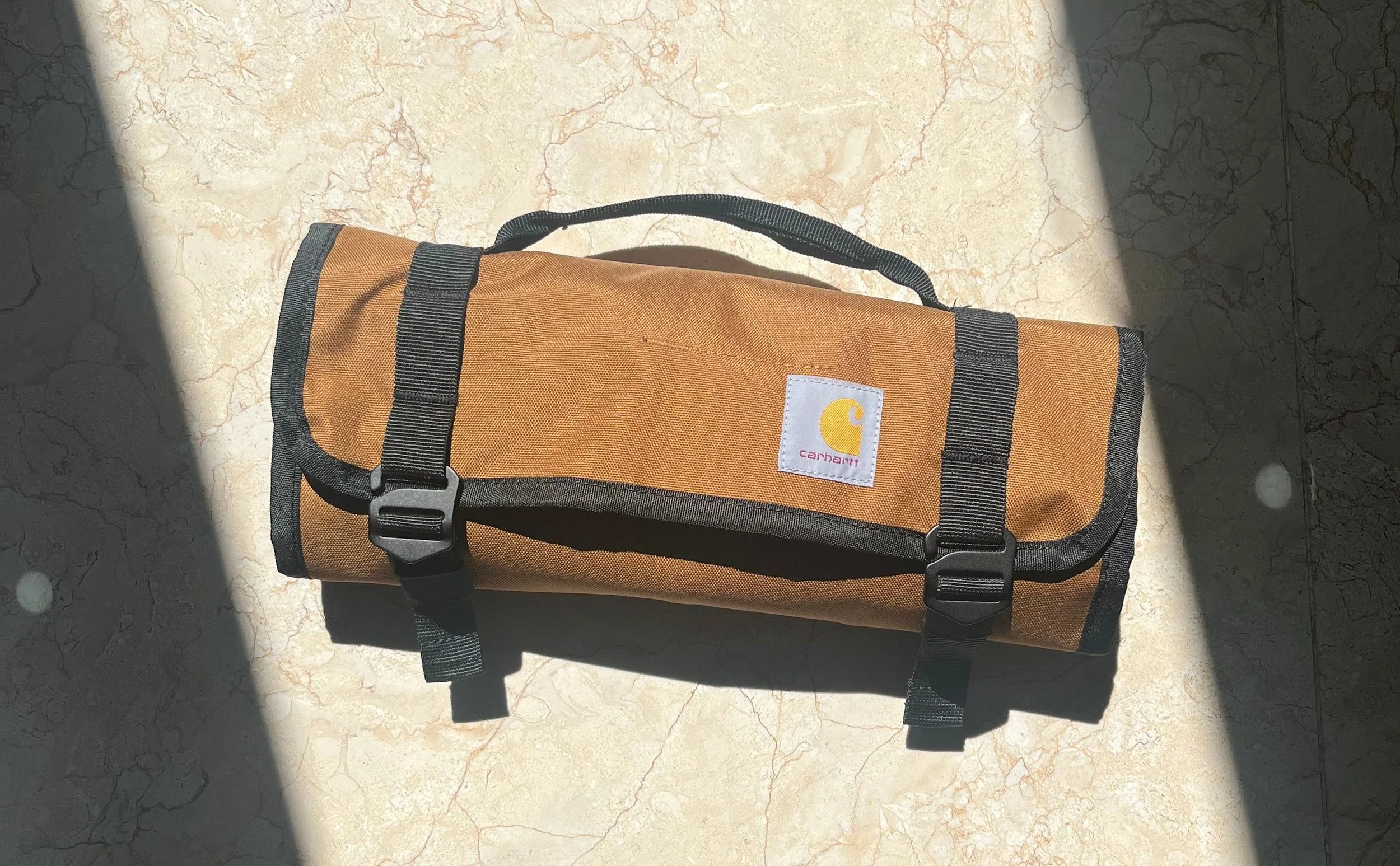
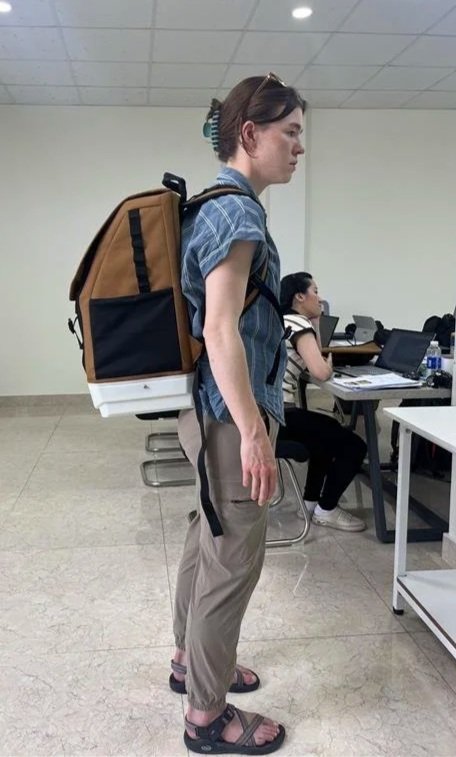
I also traveled to Vietnam to visit the factory, review early samples, and work through build details in person. Over the following months, I continued refining samples with the team: checking tool fit, testing access and organization, refining the modular system, evaluating carry ergonomics, and making sure the feature set felt intuitive in real use.
Molded base development + cmf
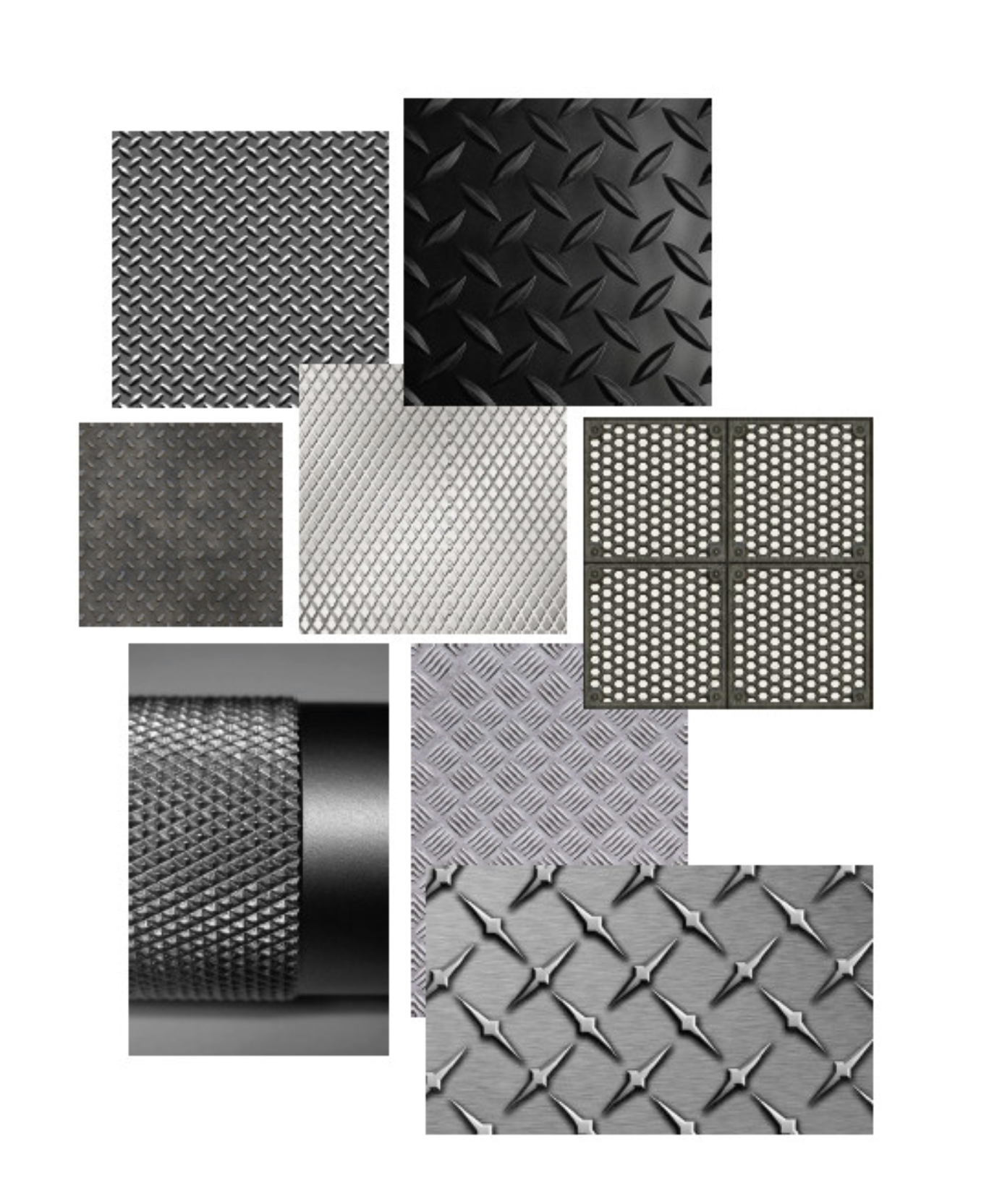
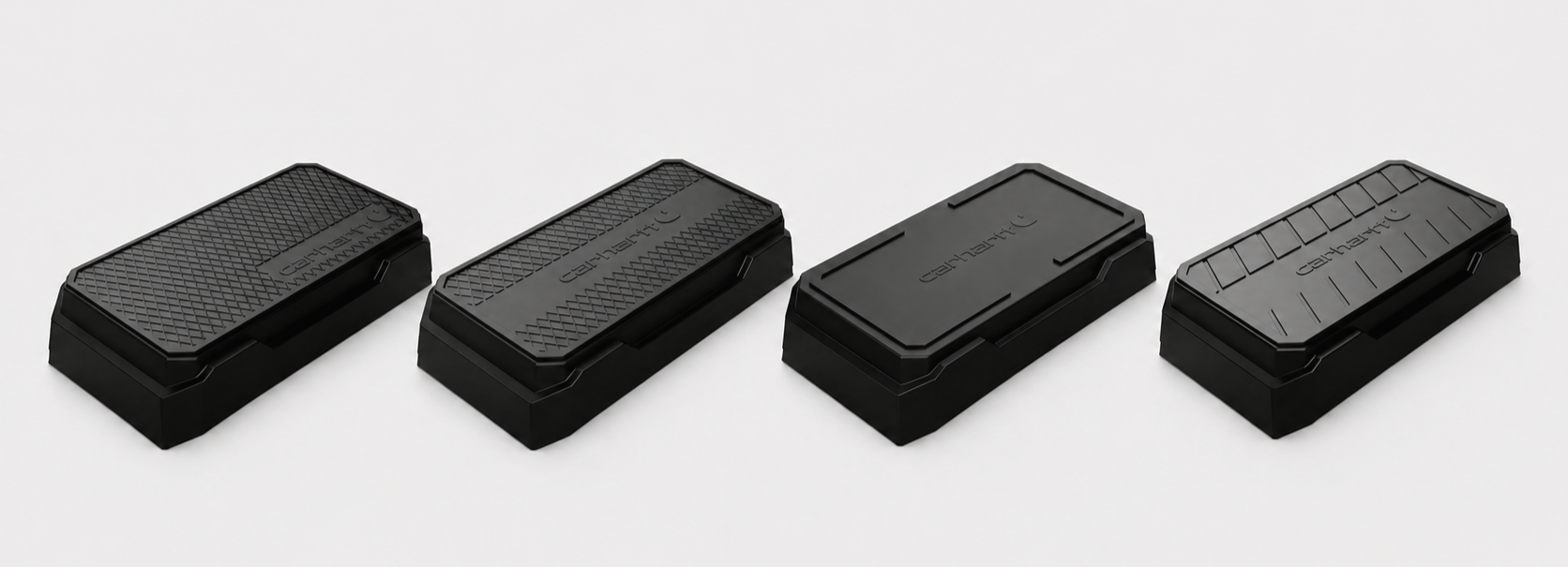
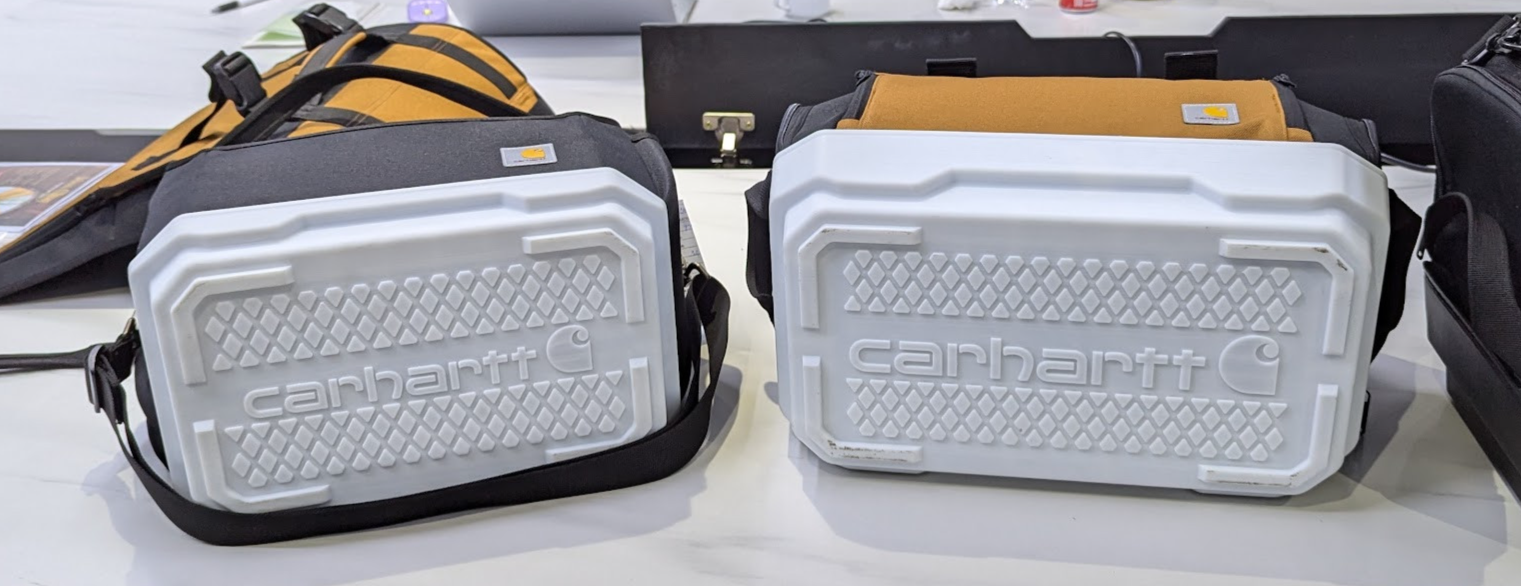
When refining the molded base, I studied a range of textures and finishes that could communicate Carhartt’s ruggedness in a way that felt authentic, but not overly literal. With few existing hardgood references in the Carhartt library, this became an opportunity to help define a lasting form language and CMF direction for the brand.
In close collaboration with our injection molding supplier, I landed on a diamond-plate-inspired texture that scaled across the molded bases of four distinct bag styles, creating a cohesive visual language while reinforcing durability and brand character.
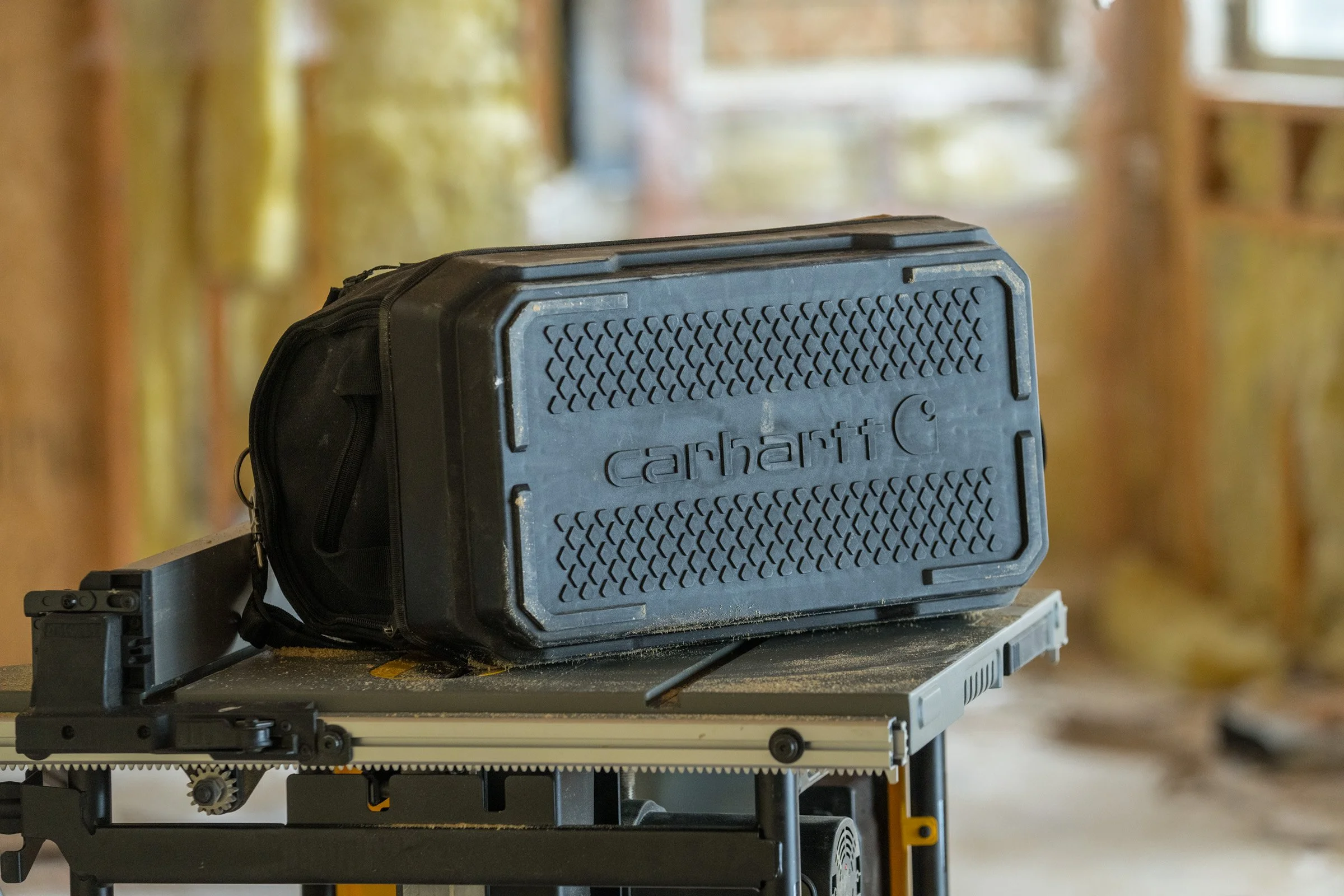
The Carhartt Station Work System launched in early 2026 to positive reviews.
Learn more here.